Let’s get this straight-forward. UPSC Civil Services Examination is an exam of questions and answers. Nobody is really interested in where you did coaching, which books you referred, how many hours you studied, what was your study method etc. etc. etc. All that matters is the quality of your answers. And since Mains examination is the most important stage of exam, the answers you write in answer sheet actually determine our destiny in this process. With this note, let us focus on some pertinent issues about answer writing.
Any opinion-based answer we write in Mains (or speak in Interview) must be “balanced”. However most of us end up writing a “confused” answer instead of a balanced one. A balanced answer does not mean that you have to give equal support to both sides. In my opinion a balanced answer is one in which we justify one view which we support. Then just mention that there exists another side too, in short and end the answer by stating your stand again.
For instance, let us see how we can write answer for this question:
Q. Comment on subsidy granted on LPG cylinders. [200 words]
Now a confused answer, in my opinion means that I write 100 words in favour of subsidy and 100 words against subsidy. On the other hand writing only points for or points against will make the answer one-sided. So my approach is to pick one side, justify it and then just mention the other side in 30-40 words.
Ans. [Introduction]
Subsidy on LPG cylinders is definitely required given the socio-economic and developmental conditions of India. [Explain points for the subsidy with data or examples- i. Welfare state: Helping the poor face inflation, ii. Promoting cleaner fuel, sustainable lifestyle, iii. Curbing deforestation, iv. Adds to food security- providing only raw grains is not enough]. – 70% of answer.
However, there are many issues in granting LPG subsidy like wrong targeting of beneficiaries, urban bias, burden on public money and dependence on volatile oil dynamics at international level. These issues can be solved by Direct Benefit Transfer and a visionary international trade policy. – Few lines.
[Conclusion- With these reforms, LPG subsidy can really help the poor and the needy. Energy security, Food security.]
Please note that this ‘balanced approach’ is applicable only to opinion-based, open ended questions. In case of question asking pros and cons of subsidy or asking clearly only pros/ only cons, the answer must be written in that way.
A much discussed issue regarding answer writing is the difference between answers of GS and that of Optional. Many of us end up writing the same answer no matter in which paper it is asked. Let us see how this can be improved. A GS answer should be written in such a way that any well-read person (practically speaking the examiner) can understand easily. It should not be loaded with technical terms or jargon. Keep in mind that the person examining your answer may be from any subject. So it is your responsibility to make things simpler for him. E.g. Using words like ‘Notogean floral realm’ may not impress a History or Sociology expert. Better explain the concept in simpler terms.
For optional, exactly the opposite is needed. Use jargons of that subject wherever possible. This shows your knowledge of that subject. E.g. In Geography, always write “Enceptisol” when you mean alluvium. Or write “Prismatic society” in Public Administration when you mean developing society. In short, your optional answer should be difficult to understand for a person with other optional.
In optional subjects, theories form core part of Paper I. These theories must be used in answers whenever possible and feasible. Linkage with theories makes the answer more specific or optional-like and more importantly, show your command on the subject. Plus the examiners (in my opinion) like the theories more than anything else! Try to think from the examiner’s perspective while writing answers.
Another issue is that expected answer may differ with paper of GS. All 4 papers of GS have a set syllabus and it must be considered while answering questions. Take this question.
Q. Write a note on urbanization and mention how India has responded to growing urbanization.
Though the basic concept remains the same, this question should be answered in different ways in each of the GS papers as per the syllabus of that paper.
- Urbanization as a geographical and sociological phenomenon in Paper I.
- Urbanization as a policy matter in Paper II.
- Urbanization and its economic and developmental aspects in Paper III.
- Values brought in by urbanization in Paper IV (if at all asked in Ethics).
It is not enough to write answer to fetch good marks. We must do some value addition. Diagrams, flow-charts, maps certainly add value to answers. It is a good habit to have relevant diagrams in the answer. But this does not mean that you should flood your answer-sheet with diagrams. Ideally, you do not need to write in words what is clearly shown in diagram. In case of maps, you can take liberty to draw only specific part e.g. only North Eastern part of India to show rivers in North East. Most importantly, always remember that diagrams should fit in properly in your word, time and space limit. And for this you need really good practice of diagrams.
Another factor adding a lot of value to your answer and making it outstanding is Current Affairs. Try to start the answer or conclude it with a relevant current event. This really packs the punch and adds those deciding extra marks. Especially, in Optionals it is always better to use recent case studies from current affairs (also in GS). In fact, many of the questions in Paper II of Optionals like Geography, Political Science, Sociology are based on current events. Try to inculcate the habit of reading news with a thought of where it can be used in answers.
Apart from time and word limit, now space limit is also introduced. Care of these limits must be taken while writing answers. In 2013 Mains, 200 words were expected for 10 marks. Practically, it is not possible to write 200 words for each answer and yet attempt maximum questions. In my opinion it is better to finish off things in 140-160 words. Try to cover maximum questions rather than trying to write few but quality (that too in our terms) answers. Asking 10 m questions and removing 20-30 markers from GS is an indication that UPSC wants more of coverage rather than depth in GS. However depth is required in Optional. To give an analogy, GS is like swimming where you need maximum coverage. But Optional is like Scuba diving wherein you have to touch the depth of knowledge.
Many of us have the habit of ignoring the ‘Question Word’ which clears what the examiner expects from your answer e.g. Describe, Analyze, Compare etc. These words are certainly important to find the exact focus and requirements of the answer. Broadly following types of questions are asked:
a) Descriptive/ Explanation based- Describe, Explain, Elaborate, Outline, Elucidate, Illustrate.
b) Cause-effect type- Give reasons of, Give impact of, Account for, Justify.
c) Opinion based- Assess, Comment, Discuss, Examine, Analyze.
d) Comparative- Compare and contrast, Differentiate.
e) Evaluation based- Evaluate, Give significance of, Review.
All said and done, a major issue still remains that of practice. Ideally we should practice at least one hour-80-90 m questions on a daily basis. This should be increased to 2 hours-160-170 m and then to 3 hours-250 m full papers. Try to write as many answers as possible. Writing full answer is not possible for all questions. But at least make a habit of mentally sketching a framework of Introduction-Content-Conclusion-Value addition for every question you come across.
Going further, I would suggest skipping traditional notes making method and prepare answers in Question-Answer format. Before reading a topic, go through the questions asked. This will add the answer-focused perspective in study. After reading, try to frame answers of those questions in Question-Answer format, just writing the points in about one page. This should be in the framework of Introduction-Content-Conclusion-Value addition. (Refer the image). You can always improve this answer as you study and revise more. These answers will basically be the best notes you can ever make. This will save time by combining notes making and answer writing practice, will make revisions easy and quick and also give a scope of updating your answers. Most importantly, you will go to the exam hall prepared with answers, instead of framing answers in those really pressing and precious 3 hours. Here are two examples.
(Click on images to enlarge)
For GS
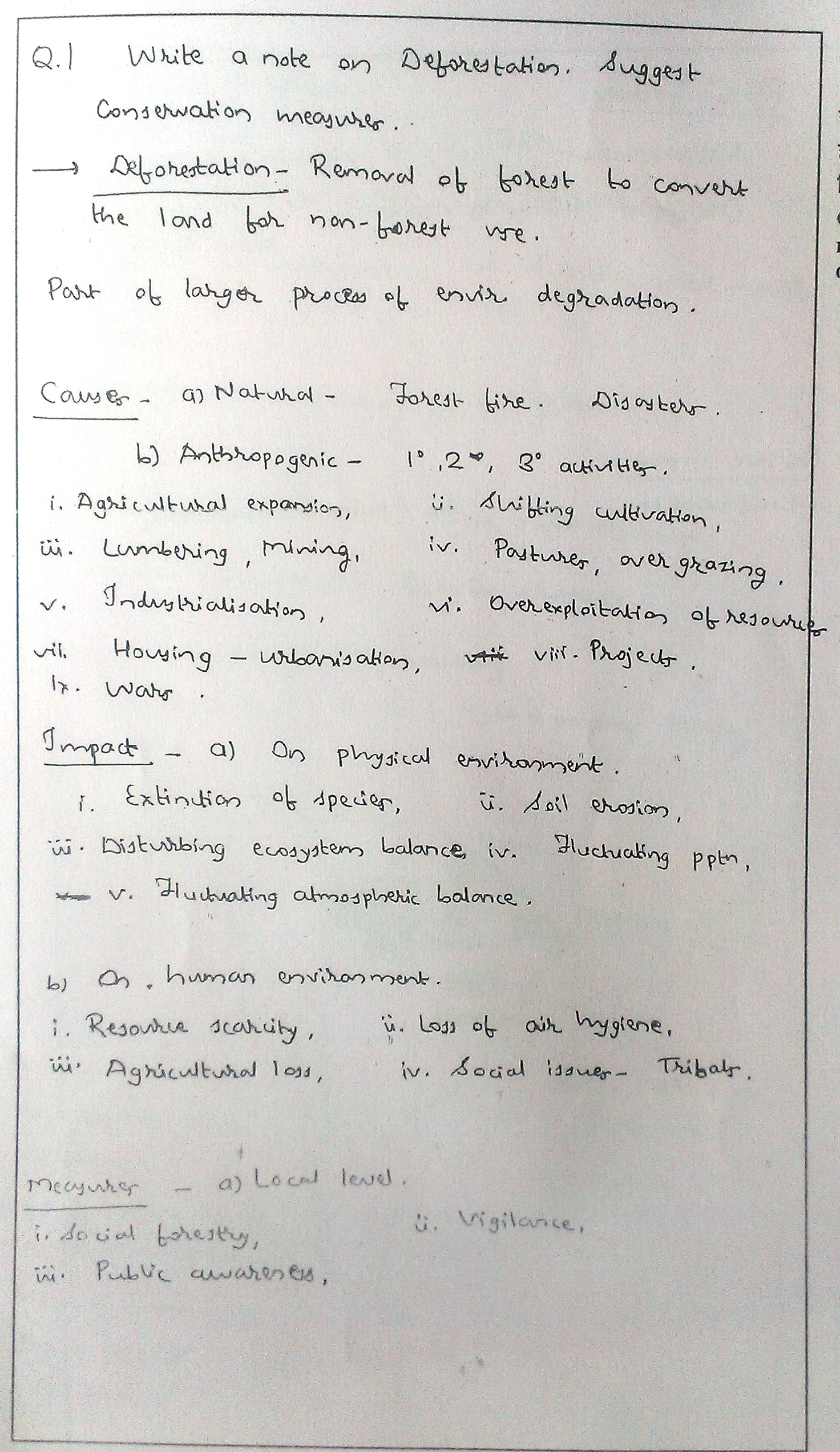
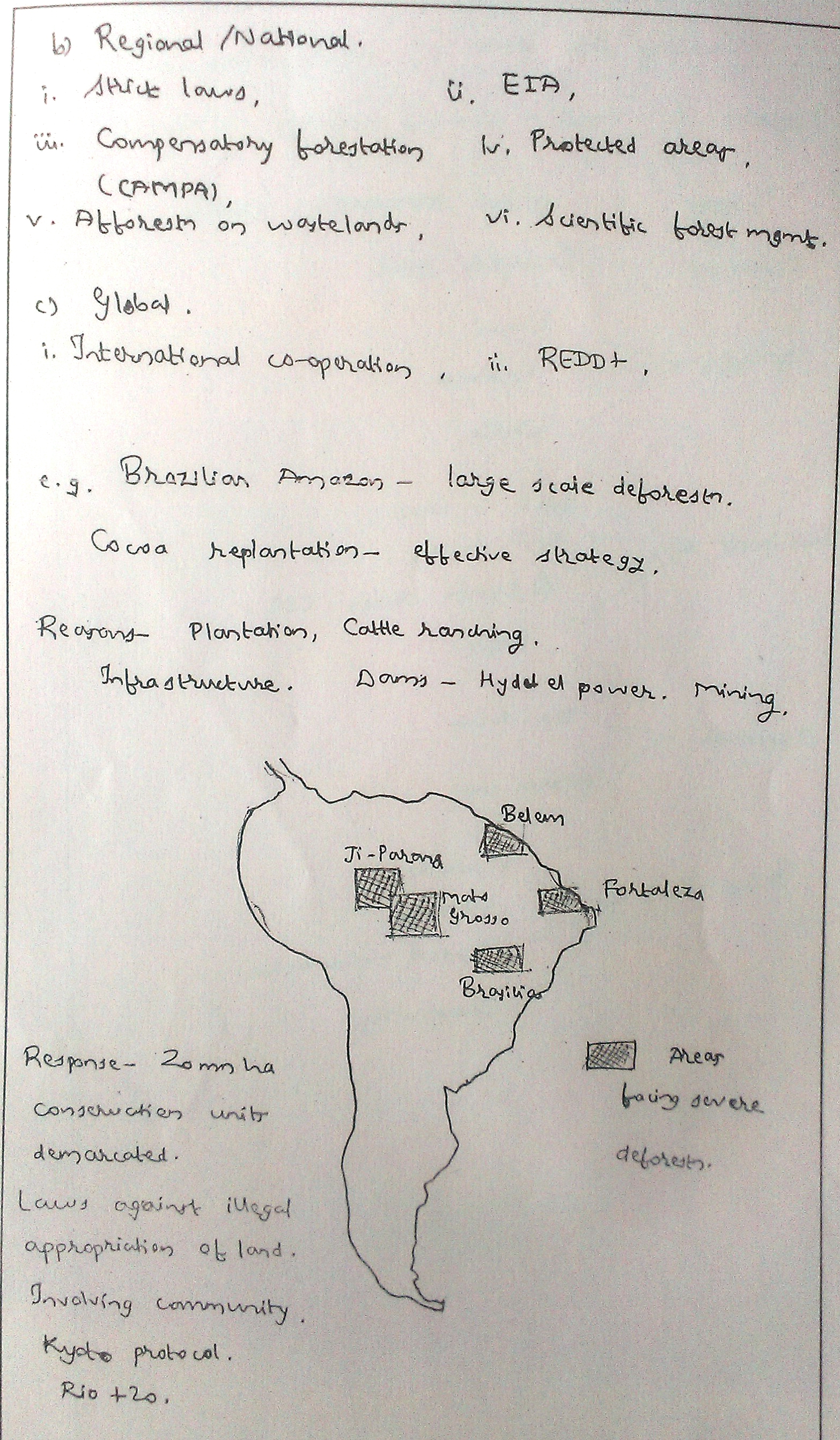
(The map is not really needed in GS. I added it with a thought to use it in Geography optional if needed.)
For Optional [Geography]
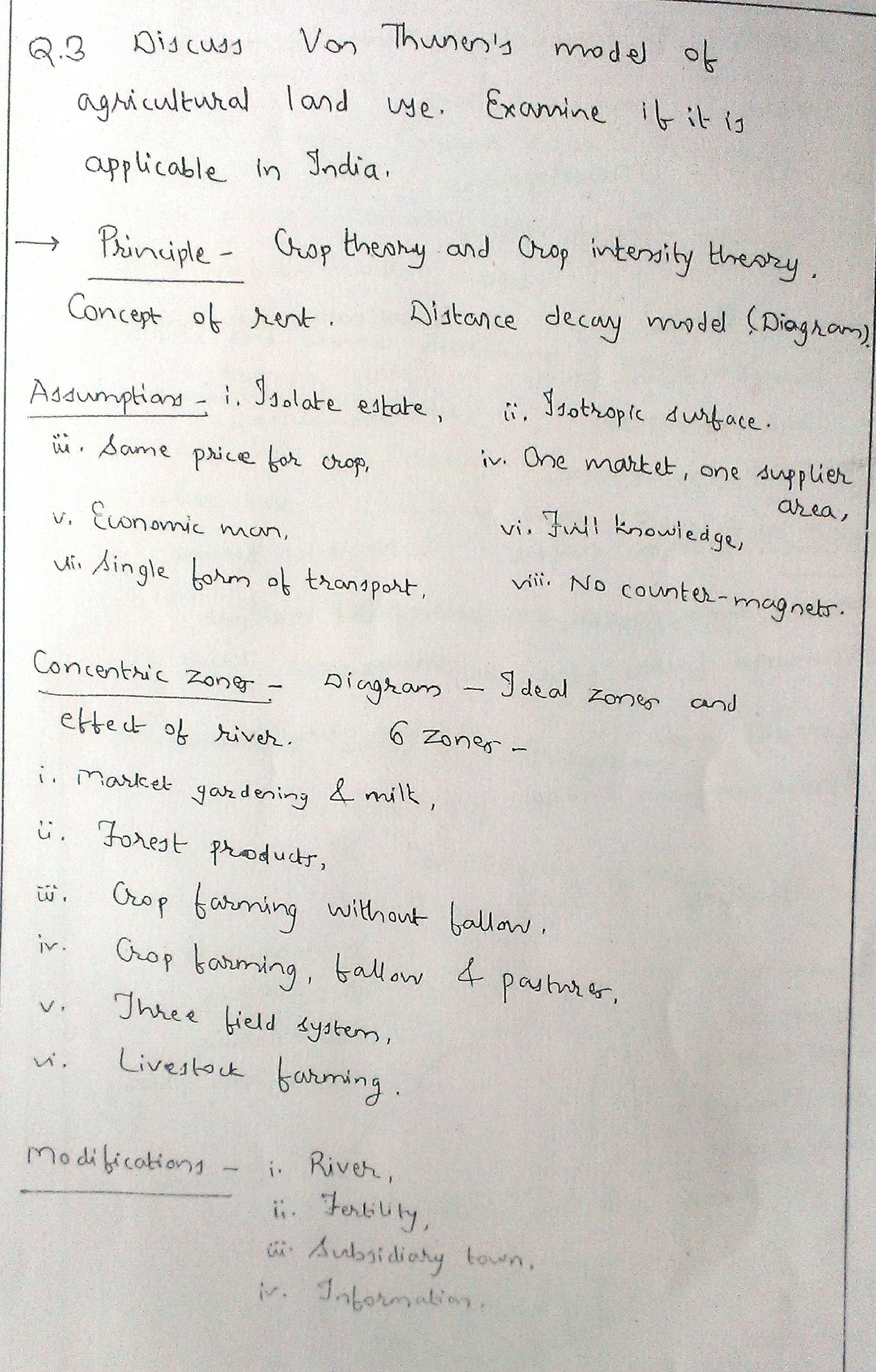
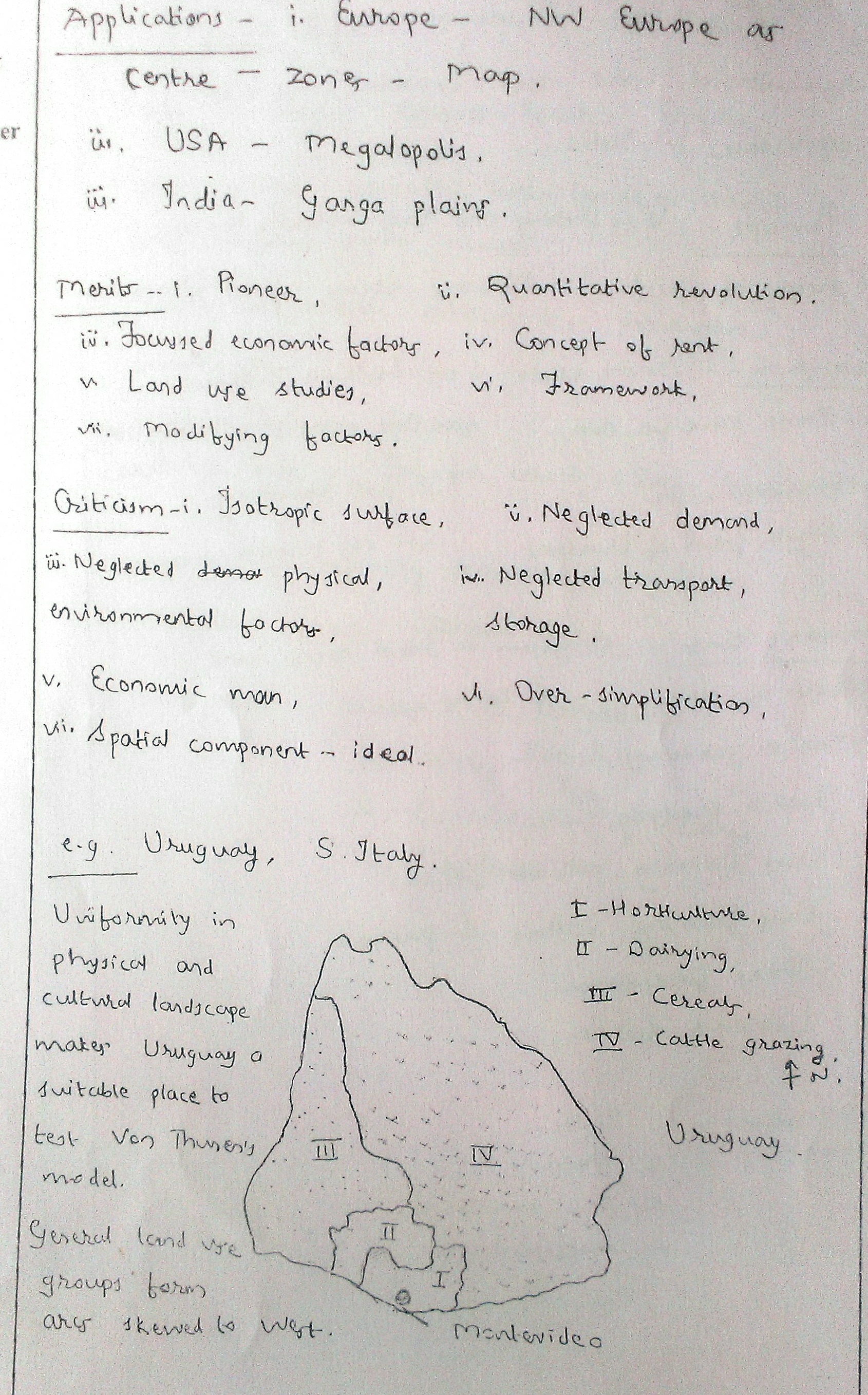
To conclude, do not focus solely on reading and information collection. Try to process the information into answers and practice them. Writing practice is the key to fetch good marks. Keep your mind open while writing answers. Do not restrict to just reproducing paragraphs from books; rather add something to it from your side. A quality answer is not a mirage. An open mind and regular practice can yield very good results.
 Expressions and Impressions
Thank you for such a detailed post on answer writing.
LikeLike
Nice initiative abhijeet, direction and focus in answer writing is highly required and you make it easy for us. Thank you for this info.
LikeLike
Great Sir…..
It would certainly help aspirants, looking for better way of organising preparations. I should say it, a “smart way”- combining notes preparations by structuring answers.
LikeLike
Thanks a lot sir
LikeLike
Thank you sir..it worths for us a lot…
LikeLike
Reblogged this on Searching for the real me and commented:
Answer writing
LikeLike
Thank you so much..
LikeLike
needful to share
LikeLike
nice
LikeLike
Thank you very much sir for your valuable guidance…
LikeLike
Thank you very much for such a nice elaboration !!
LikeLike
Thanks..Got a lot of clarity.
LikeLike
Great information and…..clarification..Thank you sir.
LikeLike
Really great work sir …this type of information is very important for all of us. This article clear my vission abt answer writting in mains.
Thanx once again sir.
LikeLike
Very good sir! Try to keep guiding… it’s so important to the aspirants like me who are in remote areas on self-preparation basis.
LikeLike