Well let me start with a confession that this analysis is coming quite late. What makes it feel even more delayed is the fact that UPSC, out of nowhere, declared the results within 40 days. Yet here is the analysis of 2019 UPSC Civil Services Preliminary examination.
So our beloved UPSC has done it again!! After 2018 shocker this year again UPSC has succeeded in completely bowling over the aspirants. In 2018 the cut-off came down to 98.00 (Ahem ahem! I had predicted 95-97 in last year’s Prelim analysis). Many candidates and experts feel this year the cut-off may go down marginally again. Anyways let us see how the paper was and from where the questions came.
Before we start a few words about why it is important to analyse this Prelims paper. It is so for three reasons:
- To understand the exact nature of questions and the source.
- To get a guessing about how UPSC is changing the pattern of questions in view of coming Mains and next Prelims.
- To demystify Prelims to the extent possible and to understand that except a few, all questions come for a reason.
It is the right time to analyze what went wrong for candidates getting low scores, and to understand where UPSC is moving with its questions for candidates getting the opportunity to write Mains. So here is my attempt to dissect the pattern of Prelims 2017 Question paper. Friends keep in mind THIS IS NOT AN ANSWER KEY. Also the categorization of the questions is a subjective matter and can vary person to person.
I have followed D set. The pattern of analysis will be
No. Keyword/ Subject/ Topic/ Type
Comment.
- AIIB/Econ/Institutions/Current
In 2018 AIIB approved a $455 Million loan for rural roads and a $400 Million loan for a water sanitation project in Andhra Pradesh. The news articles also had information about the statements in questions. It was certainly a tricky question to start.
- Inter-Creditor Agreement/Econ/Banking-Finance/Current
This agreement and the Sashakt Comittee was in news almost a year back. And very recently it has started appearing again in news as Banks want to rejig it. Questions on Banking and Monetary policy are regular feature in Prelims.
- PSB Chairmen/Econ/Banking-Finance/Current
Tricky wordings here- Selection, recommendation, appointment all those words can confuse. But if you know the functions of the Banks Board Bureau, the answer was clear. Also the Appointment Committee was not in the option making it clear. BBB selects the Chairman by recommending the candidates- just like UPSC selects Civil Servants by recommending them while DoPT appoints them. I think the trigger for this question was the appointment of former Finance Secretary as the non-executive chairman of Bank of Baroda.
- PNGRB/Pol/Institutions/Current
PNGRB was in news in context of the National Gas Grid planned by the Government of India. The third statement has clearly fooled most of the candidates.
- LTE VoLTE/SciTech/ICT/Conceptual
Basic concepts regarding 3G and 4G in Communication technology.
- Maternity Benefit (Amendment) Act, 2017/Pol/Legislation/Factual
Important amendment to the act. Not very recent so it has been classified as factual.
- Ease of doing business/Econ/Institutions/Conceptual
Though the concept always in news, the point assessed in this particular question was conceptual one. World Bank and UN and the indices, schemes or organizations related to them are important from UPSC perspective.
- Extended Producer Responsibility/Env/Institutions-Laws/Current
EPR was in news because of the E-waste (Management) Amendment Rules, 2018. Environmental laws are very critical and need deep study.
- Economic cost of food grains/Econ/Survey-Budget/Current
This issue was discussed when the Government increased food subsidy allocation by 7.5%.
- Social Capital/Econ/Development/Conceptual
Basic concept from Developmental Economics. It is also discussed in Economic Geography. Perhaps the most straight-forward question in the paper but I am sure many candidates stumbled here. Remember to clarify each and every concept you read in NCERTs or basic books.
- Service Area Approach/Econ/Banking-Finance/Factual
Now comes the easiest question in this paper. Basic from Banking section.
- Minor minerals/Pol/Schemes-Policy/Current
National Mineral Policy was approved by Cabinet in early 2019. However the question wasn’t directly from the policy.
- External debt/Econ/Banking-Finance/Factual
Factual question related to Monetary policy.
- Assets in banks/Econ/Banking-Finance/Conceptual
Yet another basic question form the concepts of Banking.
- Currency crisis risk/Econ/Banking-Finance/Current
This issue was widely discussed in the July-September quarter of 2018.
- Governor/Pol/Executive/Factual
Basic factual question.
- FPI/Econ/Banking-Finance/Conceptual
Again a basic question based on Financial markets.
- CAMPA/Env/Institutions-Laws/Current
This question was based on the judgement of January 2019 wherein the Supreme Court directed that all the funds worth around Rs 54,000 crore under CAMPA be transferred to a new Authority created by the central government.
- Review of regulators/Econ/Institutions/Factual
Tricky factual question about regulatory institutions.
- Five year plans/Econ/Development/Factual
Yet another factual question from Economics. Seems like Five year plans are still relevant in UPSC questions even in the NITI Ayog era!
- Constitution and Courts/Pol/Constitution/Factual
Expected question on Legislature-Judiciary relations.
- PPP/Econ/Basic/Factual
Very straightforward question on concepts from Economics.
- Kharif crops/Geog/Agri/Factual
Factual question from Human Geography. Agrarian distress has been in the news throughout the year.
- Agri commodities import/Econ/Foreign trade/Factual
Can be classified under Agri Economics and Survey Budget too. Though not all data needs to be remembered from Economics, knowing vital bits like this one are must.
- Liberty/Pol/Political theory/Conceptual
Like last year, concepts from Political theory make appearance this year too. Very good conceptual clarity is needed to get these questions right. Stanford Encyclopaedia of Philosophy is a good source for such concepts. It will help in Essay and GS IV too.
- Rupee slide/Econ/Banking-Finance/Current
Another question from the 2018 Currency issue.
- Data diktat/Econ/Digital Economics/Current
After Bitcoin last year, Digital Economics is explored again. It is going to be a vital topic in coming years. Data diktat was widely discussed in 2018.
- General Data Protection Regulation/SciTech/ICT/Current
Very important event that appeared in current affairs recently.
- Action Plan for Nuclear cooperation/SciTech/Nuclear Science/ Current
Important bit in news as Russia will be offering the state of the art evolutionary VVER generation “3+” technical solutions and will increase the level of Indian industry’s involvement and localization.
- Money Multiplier/Econ/Banking-Finance/Conceptual
Yet another question from the Finance-Monetary policy sector.
- PVTGs/Culture/Tribes/Current
PVTGs have been in news in context of Forest rights, Aadhar compulsion, HDI index etc. Important for Mains.
- Article 142/Pol/Constitution/Current
Another question on Legislature-Judiciary relations.
- Legislative assembly/Pol/Parliament/Factual
This was a very tough question as Article 208 is not known to most candidates.
- UNCAC,UNTOC,UNODC/IR/Institutions/Current
All these agencies were in news- though not in the most prominent way. UNCAC-Mehul Choksi case, UNTOC- Iran rejected to join, UNODC- Designer drugs threat.
- Forest Rights Act/Env/Institution-Laws/Current
FRA was discussed very widely after the Draft National Forest Policy was unveiled. The policy was alleged to be violative of the indigenous rights of forest dwellers.
- Right of marriage/Pol/Constitution/Current
This one must have been asked in context of the famous Hadiya case.
- Patents/SciTech/IPR/Factual
Basic question from Intellectual Property Rights.
- Environment Protection Act/Env/Institutions-Laws/Current
Very relevant question as National Clean Air Programme and declining air quality (especially in Delhi) made rounds in news.
- Solid Waste Management Rules/Env/Institutions-Laws/Current
National Green Tribunal had directed for implementation of these rules by various orders. Solid and Liquid waste management is a very critical issue.
- Industrial Employment Rules/Pol/Schemes-Policy/Current
Amendment to these rules was a very important event in Labour sector.
- AR-VR/SciTech/ICT/Current
AR and VR technologies were in news with regard to 5G technology.
- Denisovan/Culture/Evolution/Current
A Denisovan jawbone was discovered on Tibetan Plateau recently. It was a major breakthrough in the study of the chronicles of human evolution.
- Artificial DNA/SciTech/Biotechnology/Current
The trigger for this question has been the recent advances in Artificial gene synthesis and Cell-free amplification.
- Digital Signature/SciTech/E-Governance/Conceptual
This question is based on the conceptual understanding of Digital Signature and Digital Certificates.
- Wearable Technology/SciTech/ICT/Current
Last year Internet of Things and this year Wearable technology- UPSC is definitely keeping it up with the Gen Y technology. Wearable technology is in vogue and is termed as a big jump in Electronics.
- RNAi/SciTech/Biotechnology/Current
Global Antisense & RNAi Therapeutics are dominating the Drug delivery sector. Very important concept.
- Blackhole/SciTech/Space/Current
The biggest blackhole merger ever was detected in 2018 end. The quest to find the origin of the Universe is certainly a topic of interest for UPSC.
- MDR/SciTech/Health/Current
Multiple Drug Resistance was in news especially regarding TB prevalence and permitting generic medicines for TB.
- Cas9/SciTech/Biotechnology/Current
In 2018, He Jiankui, a Chinese scientist, announced successful conception of two children through artificial insemination, with the use of CRISPR-Cas9 manipulation before implanting the embryos. This was the first time that the human germline has been genetically manipulated, making it a hot topic
- Hepatitis B/SciTech/Health/Current
A report titled ‘New generations free of HIV, syphilis, hepatitis B and Chagas disease in the Americas’ was published in 2018. Otherwise also, Vaccination is an important topic from Public Health Programme.
- Jagirdar-Zamindar/His/Medieval/Factual
Straight from the Textbook. Land Revenue system, its evolution and subsequent modifications in British era and post-independence era are very important.
- Land reforms/His/Modern/Factual
I repeat- Land Revenue system, its evolution and subsequent modifications in British era and post-independence era are very important.
- Global Competitiveness Report/Econ/Foreign trade/Current
India’s performance in GCI was hotly discussed last year- even in the elections.
- 1813 Charter act/His/Modern/Factual
Modern India starts from 1707 but we normally focus more on events after 1857. This century and a half (1707-1857) is very important to study.
- Swadeshi movement/His/Modern/Factual
Important bit from the National Movement. Important to note that the question has cultural and educational undertones.
- Social movements/His/Modern/Factual
These are the movements for Socio-economic justice which ran parallel to the National Movement. They are all very very important for examination and beyond.
- Harappan sites/His/Ancient/Factual
Again a question straight out of the textbook. Interesting to note that last year 4500 year old DNA samples were found at a Harappan site at Rakhigarhi. (I would have called it a Current based question if Rakhigarhi would have been an option.)
- Ranyo Ashoka/His/Ancient/Factual
This is a typical History Hit-or-Miss factual question.
- Mahayana Buddhism/His/Ancient/Factual
UPSC always asks at least one question on the religious churnings from History- Jainism, Buddhism, Sufism, Bhakti cult.
- Vishti/His/Ancient/Factual
Another Hit-or-Miss factual question. Too many from Ancient History this year!
- New World- Old World plants/His/World History/Factual
Trade is an important topic in History.
- Lion-Camel-Rhino/Env/Biodiversity/Factual
Basic question on Wildlife.
- Riverside towns/Geog/Map/Factual
Even for a Geography buff, this was tricky. Maps need to be studied very thoroughly.
- Poverty line/Econ/Development/Conceptual
Poverty estimation is important in Development Economics.
- Cloud thinning-Sulfate aerosol/Env/Climate Change/Current
This geoengineering strategy was given by scientists in China last year. It was widely discussed regarding Climate change mitigation.
- Pyrolysis and plasma gasification/Env/Pollution/Current
In news in context of sustainable solid waste management.
- Agasthyamala Biosphere Reserve/Env/Biodiversity/Current
A Sabarimala like issue came up in the Agasthyamala reserve when the ban on women and children on trekking the Agasthyarkoodam peak was challenged in the Kerala High Court.
- Herbivores-Vivipary/Env/Biodiversity/Factual
Basic question on wildlife.
- Wildlife-Location/Env/Wildlife/Current
All three were in news- Mahseer declared critically endangered. Irawaddy Dolphin crisis observed in Mekong river. Rusty Spotted Cat was spotted in Maharashtra.
- Microbeads/Env/Pollution/Current
In news because of the pollution concerns and ban by Sweden.
- Kalyana Mandapas/His/Ancient/Factual
Basic factual question. Pretty tough one though!
- Delhi Sultanate/His/Medieval/Factual
As discussed earlier, the administrative set-up (specially Revenue administration) in History are significant for UPSC CSE.
- Saints/His/Medieval/Factual
Another question about the religious churnings from History.
- British colonial rule/His/Modern/Factual
Typical factual question related to Gandhian era.
- Leaders in INM/His/Modern/Factual
Organisations and their leaders are very important for Prelims.
- Tansen/His/Medieval/Factual
Bit from culture and art forms from medieval era.
- Album- portraits/His/Medieval/Factual
Another tough bit from Mughal era related to art forms.
- National Parks/Env/Biodiversity/Factual
Basic map based question. Easy if you know the locations of these National Parks.
- Atal Innovation Mission/Pol/Schemes-Policy/Current
AIM and SETU are important NITI Aayog initiatives launched recently.
- 21st June/Geog/Physical/Factual
Basic question about Solar system.
- Nitrogen compounds/Env/Pollution/Factual
Basic bit from Nitrogen cycle.
- Aliyar, Isapur, Kangsabati/Geog/Maps/Current
All were in news. Aliyar- Irrigation water issue, Isapur- Drought, Kangsabati- South Asia’s biggest floating solar power plant.
- H-CNG/Env/Pollution/Current
Delhi became the first city in India to launch H-CNG powered buses in 2018.
- Dewdrops/Geog/Physical/Conceptual
Straightforward conceptual question.
- Amendments/Pol/Parliament/Factual
Both amendments were important as they had major impact on Legislature-Judiciary relations.
- Impeachment of Judges/Pol/Judiciary/Current
Impeachment notice against CJI was hotly discussed last year.
- Ninth Schedule/Pol/Constitution/Factual
Basic factual question.
- Coal/Pol/Schemes-Policy/Current
Based on the new National Mineral Policy which was approved in 2019.
- Office of Profit/Pol/Parliament/Current
Often discussed concept in Indian Polity. It was discussed in details in context of the Delhi case where 27 AAP MLAs disqualification plea. Now looking at the options, if you know for sure that the third statement is incorrect, you can zero in to the correct option.
- Tribal land transfer/Pol/Constitution/Current
The issue about tribal lands and PESA was hotly discussed throughout the year.
- Himalayan nettle/Env/Biodiversity/Current
The Khar success story from Nepal was in news regarding this plant.
- Remote sensing/SciTech/Space/Factual
Factual question from Space technology.
- Forest cover/Env/Biodiversity/Factual
NCERT type question.
- Methane hydrate/SciTech/Energy/Current
Flammable ice or Methane hydrate deposits were tapped for extraction in Japan recently. It is termed as the fuel of future.
- Biomass burning/Env/Pollution/Current
Atmospheric pollution due to biomass burning has been in news for last few yars.
- Sea locations/Geography/Maps/Factual
Atlas based question.
- Rice export/Econ/Foreign Trade/Factual
Tricky factual question.
- River origins/Geog/Maps/Factual
Another typical map based question.
- Carbofuran/Env/Pollution/Current
In news related to pesticide poisoning in some states.
- Wetlands/Env/Biodiversity/Current
In news because of a court petition about wetland notification in Maharashtra and drying up of Assam wetlands.
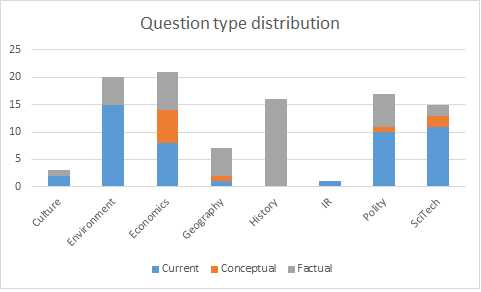
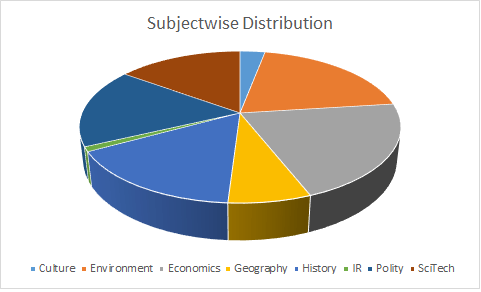
Let us now see the distribution across the subjects and topics.
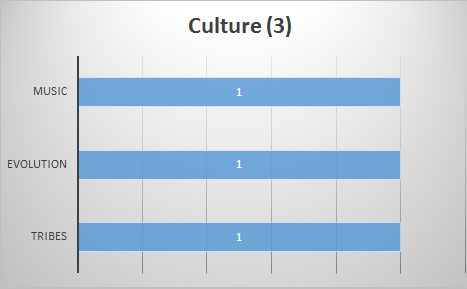
Culture: Surprisingly Culture had less questions. All three were from different sections. Both the factual questions were tough to pick from news. The only factual question was even tougher. That means Culture was real tough nut to crack this year. Thankfully it had only 3 questions (4 less than last year).
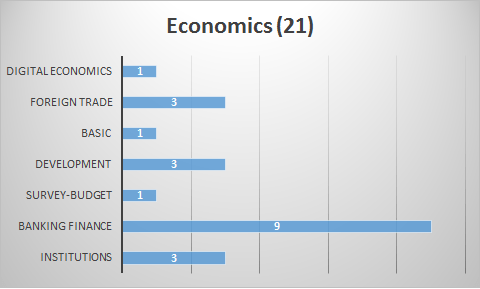
Economics: Economics had the largest share this year with 21 questions- one more than last year. It was certainly tough because of 7 factual data based questions. Further there were 6 concept based questions which made the candidates think a lot. 8 current based questions were reasonably gettable. Banking-Finance-Monetary Policy had 9 questions- the highest for any topic. Foreign trade, Development Economics and Institutions also had sizeable presence. Certainly Economics was tougher than average.
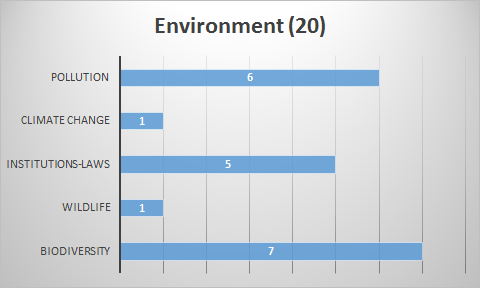
Environment: 20 questions came from this subject which has been growing in importance every coming year. Last year had only 9. It was a good mix of current and factual (15 and 5) questions. As expected the highest share was from Biodiversity (7). Pollution and Institutions-Laws also had good representation. Environment was moderately difficult but needed very detailed newspaper reading.
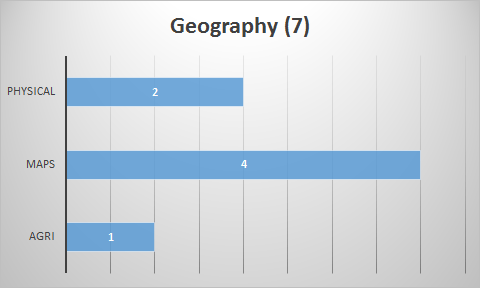
Geography: 7 questions- 5 factual, 1 conceptual and 1 based on current affairs featured in this year’s paper. There was a sizeable number of map based questions (4) like 2017. Hardness level for this subject was moderate.
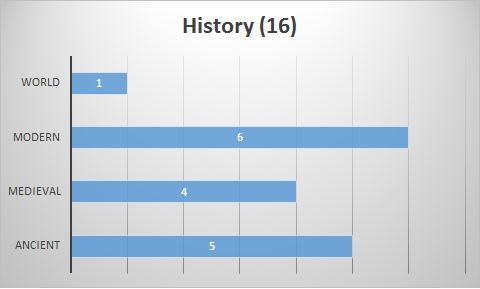
History: This was the make-or-break section this year. 16 factual questions from the detailed readings of History severely damaged the confidence levels of many candidates. Ancient, Medieval, Modern history had good representation. About half the questions were difficult even for History optional students. History was tough- like a spell of fiery fast bowling which can unsettle you if not faced grittily!
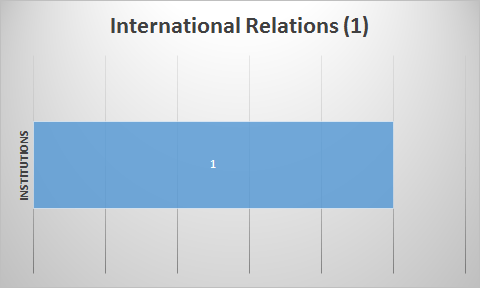
International Relations: Just one current based question from Institutions. It was also a tough question. From last year’s 9, the number of questions went down a lot.
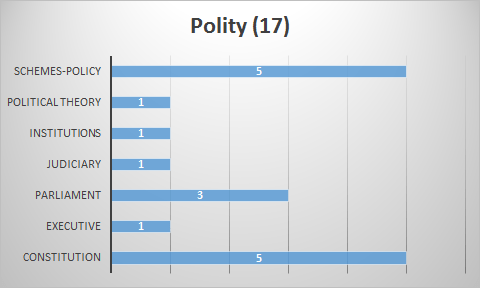
Polity: A critical component of Prelims, Polity had its fair share of 17 questions. Schemes-Policy (5 questions), Constitution (5) and Parliament (3) together dominated the section. 10 questions were current based. The factual questions were mostly straightforward. It was relatively easier section but it was also prone to silly mistakes.
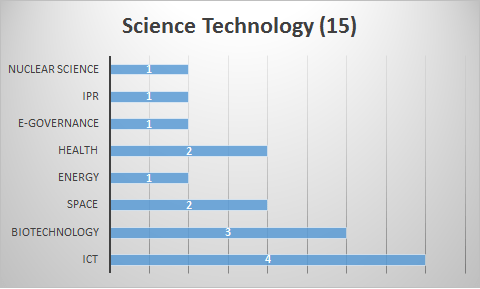
Science Technology: A mixed bag as always of 15 questions, SciTech was largely made up of ICT (4) and Biotechnology (3). Health and Space also had a couple of questions each. Current based questions were gettable with good newspaper study. It was moderately tough.
Generally speaking, 2019 Prelims had the highest number of factual questions in quite a few years: 42. This made candidates go blank on many occasions. Current based questions came down from 52 last year to 48. They needed a deep study of the current affairs. Conceptual questions (10) were less than expected.
Undoubtedly this was the toughest paper in 3 years. There are four major reasons for this. Nearly half of the factual questions had no chance of logical elimination. These Hit-or-Miss type questions reduce the numbers of questions attempted. This automatically makes it necessary to solve almost all of the above questions to keep the attempt more than 80, thereby increasing negative scoring risk.
Current based questions were dug out from some unfocussed news Similar to 2018, most of the current affairs based questions were from news which were not really prominently highlighted by media (e,g, Denisovan or Alipur-Isapur-Kangsbati). Other current affairs based questions tested the detailing and depth of background knowledge. Lastly less number of questions from IR, Geography and also slight reduction in weightage to Polity made the paper tough. Geography and Polity are relatively the most static subjects with certain core areas frequently covered in the exam. But there were only 25 questions from these three subjects (37 last year).
UPSC has surprised by declaring results in 40 days. The cut-off must have been around 93-95 this year. The candidates who have not qualified may use this analysis to decipher what went wrong. The past three year analysis will definitely come handy while preparing for the glorious uncertainties of 2020 Prelims. Those who have qualified for the Mains can use this analysis to gauge the pattern UPSC might be following. While studying for Mains, focus on basics and trending issues. Study news thoroughly and write as much as you can. Prepare hard enough to be ready to face any surprise that UPSC throws. And remember: It’s not over till it’s actually over.
Good luck!!
 Expressions and Impressions
Leave a comment