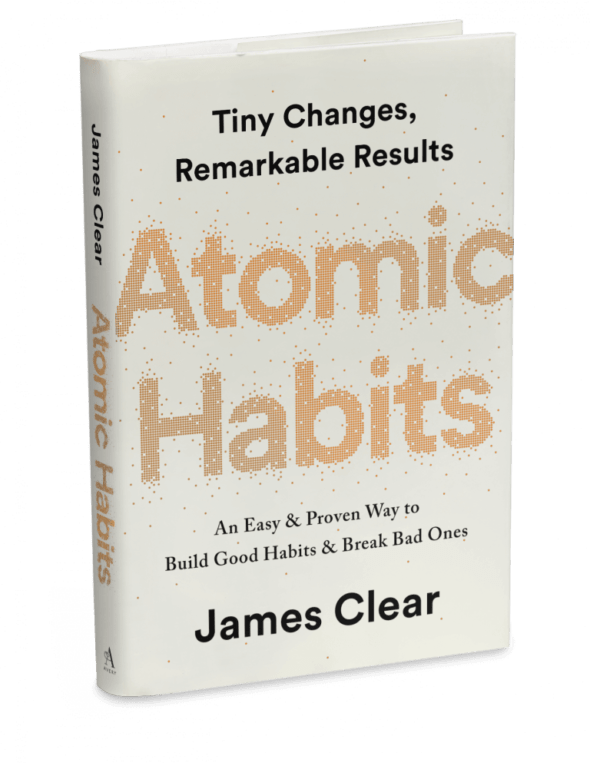
Atomic Habits by James Clear (Penguin Books) is the most comprehensive and practical guide on how to create good habits, break bad ones, and get 1 percent better every day. James Clear, one of the world’s leading experts on habit formation, reveals practical strategies that will teach you exactly how to form good habits, break bad ones, and master the tiny behaviors that lead to remarkable results. Clear mentions that if you’re having trouble changing your habits, the problem isn’t you. The problem is your system. Bad habits repeat themselves again and again not because you don’t want to change, but because you have the wrong system for change. You do not rise to the level of your goals. You fall to the level of your systems. Here, you’ll get a proven system that can take you to new heights.
A must read book indeed!!
Highlights:
The Power of Small Changes
Tiny improvements compound over time, making 1% better every day far more powerful than dramatic short-term change. The aggregation of marginal gains shows how small improvements accumulate. Progress often remains invisible during the Valley of Disappointment until we cross the Plateau of Latent Potential.
Systems and Identity
Instead of focusing only on goals, build systems that produce the desired outcomes. Lasting change moves from outcomes → processes → identity: change what you believe about yourself, then let your habits reinforce that identity. Small wins provide evidence for the person you want to become.
The Science of Habits
Every habit follows a cue → craving → response → reward loop, creating feedback that makes behaviour increasingly automatic. Clear understanding of this loop leads to the Four Laws of Behaviour Change: make it obvious, attractive, easy and satisfying. To break bad habits, reverse these laws.
Make It Obvious
Awareness is the first step: use a habit scorecard and implementation intentions to identify when and where habits occur. Habit stacking connects a new habit to an existing one, while point-and-call and environment design make cues visible. To break bad habits, make their cues invisible or difficult to notice.
Make It Attractive
Habits become powerful when they are associated with pleasure, anticipation and dopamine-driven feedback loops. Temptation bundling combines something desirable with something beneficial, while social norms encourage us to imitate the close, the many and the powerful. Reframing habits can make good behaviours attractive and bad habits unattractive.
Make It Easy
The more convenient a behaviour is, the more likely it is to happen. Reduce friction, prepare your environment in advance and use decisive moments to make good choices easier. The Two-Minute Rule makes habits approachable by starting with a very small action; bad habits can be weakened by adding friction and making them difficult.
Make It Satisfying
Immediate satisfaction strengthens behaviour because the brain naturally favours rewards that arrive quickly. Habit tracking, commitment devices, automation and accountability partners help maintain consistency, while habit contracts introduce consequences for failure. Good habits should be immediately rewarding; bad habits should be made immediately unsatisfying.
Habits and Behaviour
Habits do more than produce results—they create freedom by reducing the mental effort required for everyday decisions. Genetics influence our tendencies and strengths, so the key is to choose environments and fields where our natural abilities fit the demands. The best habits are those that align with both our identity and our individual strengths.
Stay Consistent
Habits are built through repetition, not perfection, and mastery requires learning to continue even when novelty disappears. The Goldilocks Zone—tasks that are challenging but manageable—keeps motivation alive. Habit tracking helps maintain consistency, while the rule “never miss twice” prevents one failure from becoming a pattern.
Continuous Improvement
Once habits become automatic, reflection and review ensure that automation does not replace quality or growth. Mastery comes from thousands of small improvements combined with deliberate practice. Success is therefore not a destination but a system: continuously review, refine and improve the process that produces your results.
Courtesy: www.goodreads.com
 Expressions and Impressions
Leave a comment