The First Minute: How to start Conversations that get Results is a multi-award-winning book by Chris Fenning which teaches specific methods for having short, clear business conversations, emails, meetings, interviews, and more. This book is a step-by-step guide for clear, concise communication in everyday work conversations. Being concise is not about trying to condense all the information into sixty seconds. It is about having clear intent, talking about one topic at a time, and focusing on solutions instead of dwelling on problems. The book talks about four points-
– Having shorter, better work conversations and meetings
– Getting to the point faster
– Leading your audience towards the solution you need
– Applying one technique to almost every conversation with great results.
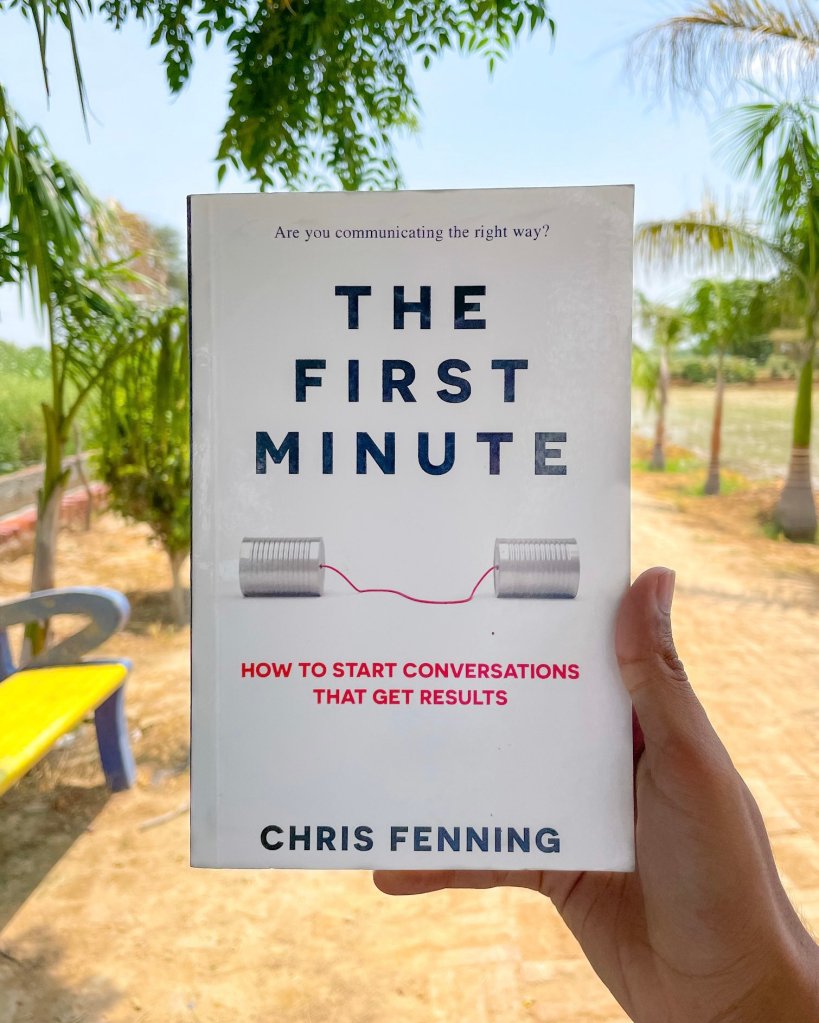
Pic: Twitter @librarymindset
Highlights:
# It doesn’t matter how much people like you. Everyone is busy. You will lose attention if you ramble. If you cannot deliver information in an organized way, you will have a hard time being respected professionally.
# The way we communicate at work influences how people think about us. It can impact the opportunities we get or don’t get, and the consequences can be significant. Poor communication skill is one of the top reasons why people don’t reach the positions they deserve.
#It’s the responsibility of the speaker to ensure that the audience is ready to listen and recieve the message. Good speakers convey how much time they will speak and also try to elicit some kind of response from the audience at the very beginning.
# Summarise your entire message in a few words to start. The intent of the conversation should be clear in the very first minute.
# If you find it difficult to frame the first minute conversation opener, you can use the GPS method. Goal is what you are trying to do or achieve. Problem is why you are having trouble doing or achieving it. Solution is what you will do to solve the problem and reach the goal.
# Framing is the simplest way to prepare an audience to receive your message before you go into detail. Context, intent and key message are three elements of framing.
# Using a structured summary in the first minute of your conversation will provide your audience with a concise synopsis of what they are about to be told, what is expected of them, and the next steps that need to be taken.
# Always start with the least amount of information and data possible to make your point. Too much information makes it harder for people to understand your message and purpose.
# Simple and to the point is always the best way to get your point across. Key message has to be precise and clear. Context setting is important but it should not overshadow the key message.
# If as an audience you find yourself in a situation where more than a minute has elapsed without the purpose of the conversation being clear, ask the speaker to clarify his or her intentions. This will help you both get the most out of the conversation.
References:
Twitter @librarymindset
 Expressions and Impressions
Very nice
LikeLike
Very insightful 👍
LikeLike