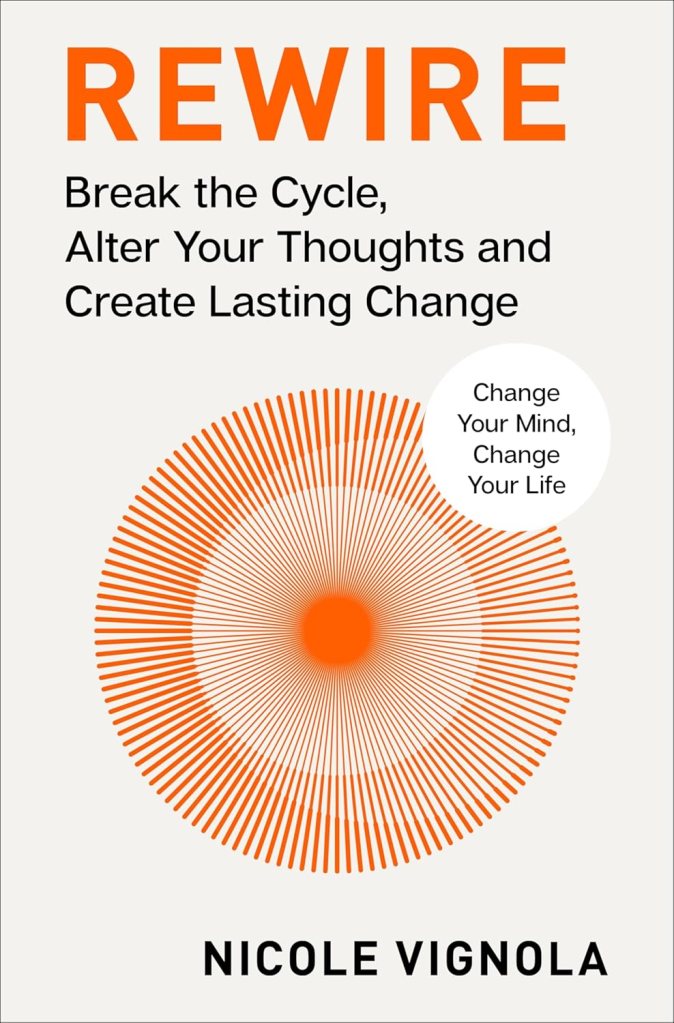
In a world where stress, distraction, and self-doubt often dominate our daily lives, Rewire by Nicole Vignola offers a refreshing and science-backed roadmap to mental clarity and personal transformation. Rooted in the latest neuroscience, the book shows that change isn’t just possible—it’s biological. By leveraging the brain’s natural ability to rewire itself, Vignola empowers readers to break free from limiting beliefs, overcome destructive habits, and build a life driven by purpose, resilience, and clarity.
What sets Rewire apart is its practical and approachable take on concepts like neuroplasticity, emotional regulation, and habit formation. Rather than offering vague self-help advice, Vignola draws on her expertise as a neuroscientist to explain how we can consciously reshape our thoughts and behaviors using proven techniques. Whether you’re striving for professional growth, emotional balance, or simply better focus, the book provides a toolkit to reprogram your brain and unlock your potential—one intentional thought at a time.
1. Neuroplasticity Is Lifelong
Neuroplasticity refers to the brain’s ability to reorganize and form new neural connections throughout life. Once thought to be fixed after childhood, science now shows that our brains can adapt and change well into old age. This means we are never “stuck” in our habits or thought patterns—we always have the power to change. Whether learning a new skill or unlearning limiting beliefs, your brain has the capacity to rewire itself continuously.
2. Repetition Strengthens Neural Pathways
The more frequently we engage in a particular thought or behavior, the stronger the associated neural pathways become. This principle is often summarized by the phrase, “neurons that fire together, wire together.” Just like muscle memory, mental habits become more automatic with repetition. Repeated positive behaviors can eventually override old, unhelpful patterns.
3. Breaking Negative Cycles
Our brains are naturally wired to focus more on negative experiences as a survival mechanism—a trait known as negativity bias. This means we may dwell on failures or fears more than successes, which can create self-reinforcing cycles of negative thinking. Nicole Vignola emphasizes that by actively practicing gratitude, reframing thoughts, and cultivating optimism, we can counteract this bias. Doing so helps disrupt unhelpful cycles and promotes emotional resilience.
4. Visualization as a Tool for Change
The brain often doesn’t distinguish strongly between real and imagined experiences—meaning that visualizing success can create real neurological changes. By mentally rehearsing behaviors or outcomes, you engage brain regions associated with action, motivation, and reward. This helps prime the mind for success and reduces anxiety related to performance. Visualization becomes a practical tool in building confidence and clarity around your goals.
5. Habit Formation Through Consistency
Building new habits is less about willpower and more about creating an environment that supports consistent action. By identifying clear triggers and making small, manageable changes, we can make new behaviors stick. Celebrating small wins along the way helps reinforce the neural circuits involved. Over time, what starts as a conscious effort becomes an effortless routine.
6. The Role of Physical Exercise
Regular physical activity plays a critical role in cognitive health. It releases myokines—special proteins that enhance brain function, support neurogenesis (creation of new brain cells), and reduce inflammation. Exercise also boosts mood, enhances memory, and improves concentration, making it a foundational habit for mental clarity. According to Vignola, even moderate exercise has measurable benefits on brain performance and plasticity.
7. Importance of Sleep
Sleep is when the brain consolidates learning and repairs neural connections, making it essential for cognitive performance. Chronic sleep deprivation impairs memory, decision-making, emotional regulation, and the ability to form new habits. Nicole emphasizes that adequate sleep isn’t optional—it’s a biological necessity for mental growth. Prioritizing sleep strengthens the brain’s adaptability and improves long-term well-being.
8. Managing Dopamine Levels
Dopamine is a key neurotransmitter involved in motivation and reward, but excessive stimulation through constant novelty or gratification can dull our natural motivation. Vignola suggests being mindful about activities that spike dopamine—like social media or junk food—as they can interfere with sustained focus and emotional regulation. Instead, cultivating delayed gratification and meaningful goals keeps dopamine systems in balance. This fosters long-term motivation and emotional steadiness.
9. Mindfulness and Self-Awareness
Practices like meditation, journaling, or body scans enhance our awareness of internal thoughts and feelings. By becoming more conscious of our habitual reactions, we gain the power to change them. Vignola emphasizes that mindfulness isn’t just about relaxation—it’s about retraining the brain to pause, reflect, and respond rather than react. Over time, this builds mental flexibility and emotional intelligence.
10. Three Phases of Transformation
Nicole outlines a clear model for meaningful change in three phases: first, become aware of and eliminate recurring negative thoughts; second, rewrite your internal story with a healthier, more empowering perspective; and third, repeatedly reinforce these new patterns through aligned behaviors. Each stage builds on the last, forming a step-by-step process for internal rewiring. This approach ensures that transformation is not only intellectual but deeply embodied.
11. Self-Directed Neuroplasticity
We have the ability to guide the rewiring of our brains through intentional actions and thoughts—a process known as self-directed neuroplasticity. By consciously choosing where to place our attention and how we respond, we shape our neural structure. It’s a powerful reminder that we are not victims of our biology; we are active participants in our brain’s evolution. Even small, daily choices can lead to significant long-term change.
12. Interplay Between Mental and Physical Health
Mental and physical health are deeply interconnected—what affects one, affects the other. Nicole highlights that taking care of your body through nutrition, movement, and rest directly impacts your brain’s ability to adapt and function. Moreover, building self-confidence and taking responsibility for your actions strengthens mental resilience. Understanding and respecting this mind-body link is key to achieving sustainable, holistic growth.
 Expressions and Impressions
Leave a comment