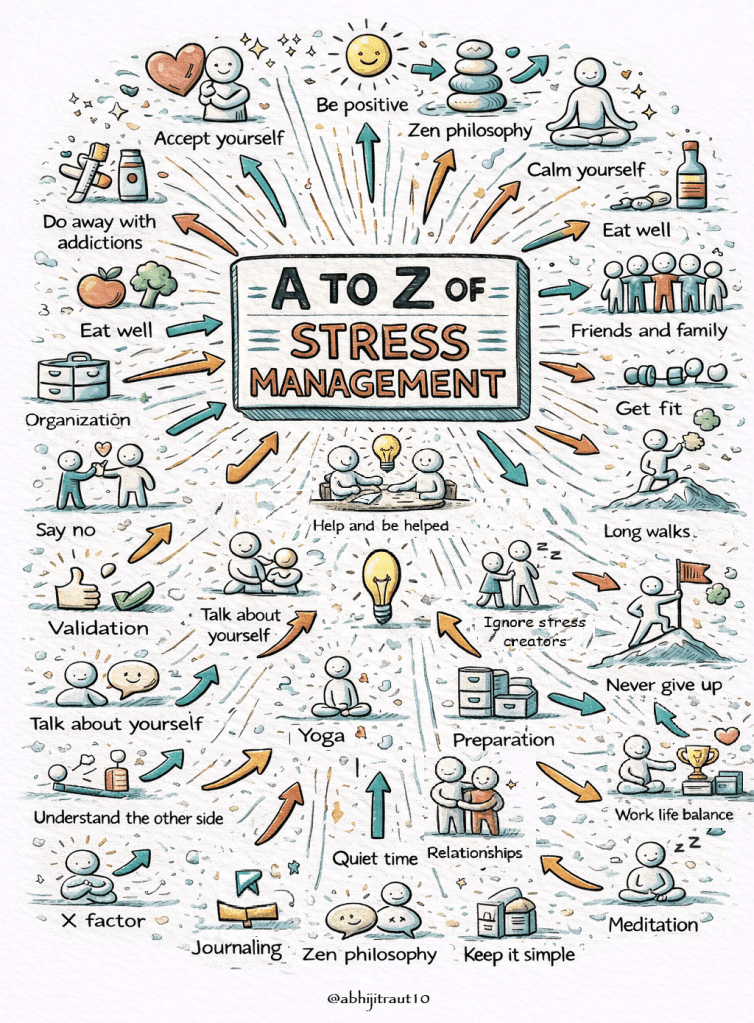
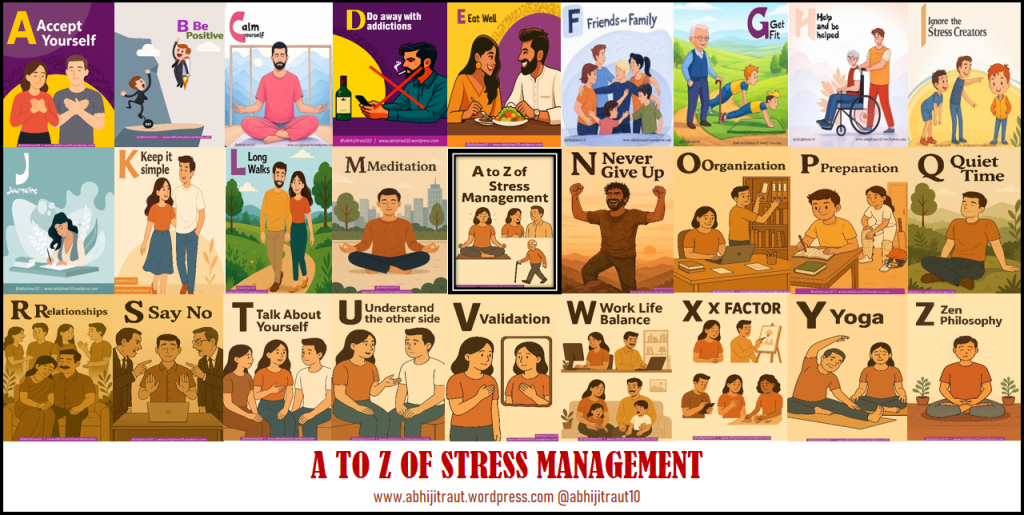
As the New Year begins, it’s the perfect time to reset our minds and build healthier habits for handling life’s pressures. Stress touches everyone, but how we respond to it can shape our energy, focus, and happiness throughout the year. This guide – an A to Z of Stress Management offers simple, practical lessons that turn everyday challenges into opportunities for calm and growth. From Acceptance to Zen, each letter brings a fresh reminder that managing stress isn’t merely about avoiding it, but about learning to navigate it with balance, resilience, and positivity.
A: Accept Yourself
Effective stress management begins with self-acceptance, which means recognizing one’s strengths and weaknesses without judgment, practicing self-compassion, and forgiving past mistakes. Through mindfulness, one can clear negativity and focus on positive growth, nurturing resilience and control over how to respond to challenges. Studies show that embracing oneself reduces the impact of external pressures and negative emotions, while acknowledging imperfections and setbacks as natural parts of life helps to approach stress with a proactive mindset, ultimately minimizing its effect on overall well-being.
Self-acceptance turns imperfections into strength, helping to face stress with resilience and calm.
B: Be Positive
The “Be Positive” mindset is about embracing optimism, hope, and resilience by focusing on the good in situations, finding opportunities in adversity, and responding to challenges with constructive perspective rather than denial. This approach enhances mental and physical well-being by reducing stress, boosting happiness, strengthening relationships, and encouraging proactive action toward goals. Positivity also spreads to others, creating supportive environments, while practices like gratitude, mindfulness, and self-compassion help shift focus from problems to possibilities. Ultimately, being positive is a conscious choice that allows individuals to navigate life’s difficulties with grace, resilience, and joy.
Positivity is a choice that turns challenges into opportunities and fills life with resilience and joy.
C: Calm Yourself
Calming yourself is a vital stress management strategy that restores emotional and physical balance through practices like deep breathing, mindfulness, and progressive muscle relaxation, which ease tension and reduce anxiety. These techniques, combined with supportive environmental changes such as walking, listening to soothing music, or creating a peaceful space, help strengthen awareness of stress triggers and promote relaxation. By consistently incorporating these calming habits into daily life, individuals build resilience, manage challenges more effectively, and reduce the overall impact of stress on their well-being.
Calmness is the anchor that steadies the mind and softens the weight of stress.
D: Do away with Addictions
Addictions, whether to substances or behaviors, may offer temporary relief from stress but ultimately worsen it by creating long-term physical, emotional, and mental health issues. Breaking free requires healthier coping strategies such as mindfulness, deep breathing, and physical activities that release tension and boost natural stress relievers. Professional support and strong social networks further aid recovery, while building routines with positive hobbies and problem-solving skills fosters resilience. By prioritizing mental and emotional well-being, individuals can replace harmful coping mechanisms with sustainable practices, leading to greater balance, improved health, and a more fulfilling life.
True freedom from stress begins when we replace harmful addictions with healthy, lasting choices.
E: Eat Well
Proper nutrition is a powerful tool for managing stress, as a balanced diet helps regulate hormones, reduce inflammation, and improve mood, fostering resilience. Nutrient-rich foods like fruits, vegetables, whole grains, and lean proteins provide essential vitamins and minerals that support brain function, while omega-3 fatty acids, magnesium-rich foods, and complex carbohydrates further aid in reducing tension, stabilizing blood sugar, and promoting mental well-being. Conversely, excessive caffeine, sugary, and processed foods can heighten anxiety, disrupt sleep, and trigger irritability. By making mindful food choices and combining them with practices like exercise and mindfulness, individuals can naturally strengthen their ability to cope with stress and enhance overall health.
Mindful eating empowers the body and mind to face stress with strength, balance, and resilience.
F: Family and Friends
Family and friends play a vital role in stress management by offering emotional support, validation, and a sense of safety that helps individuals cope more effectively. Social interactions—whether through conversations, shared hobbies, or casual gatherings—shift focus away from worries, foster positivity, and create a protective buffer against emotional distress. By spending time with loved ones, people can boost their mood, strengthen connections, and build resilience, making social support a powerful tool for overall mental health and well-being.
True strength against stress is found in the warmth of family bonds and the support of friends.
G: Get Fit
Getting fit is a powerful way to manage stress, as physical activity releases endorphins that boost mood, ease anxiety, and promote balance. Regular exercise not only improves sleep, focus, and mental health but also provides structure and a sense of accomplishment, helping you feel more in control. Whether through solo workouts or group activities, fitness fosters connection, reduces isolation, and adds joy to daily life. Ultimately, making time for movement is an act of self-care that builds resilience, strengthens the mind, and transforms stress into energy for a healthier, more balanced life.
Fitness transforms stress into strength, building resilience and balance from within.
H: Help and be helped
Seeking and offering support are powerful ways to manage stress, as sharing feelings with friends, family, or counselors eases emotional burdens, reduces isolation, and fosters mutual understanding. At the same time, helping others through kindness, volunteering, or simply being present creates purpose, strengthens connections, and boosts well-being by releasing feel-good hormones. Together, these acts of giving and receiving support build resilience, instill hope, and reinforce the idea that no one has to face stress alone—making “help and be helped” a meaningful attitude for healthier living.
Helping and being helped transforms stress into resilience by nurturing connection, compassion, and shared strength.
I: Ignore Stress Creators
Ignoring unnecessary or unchangeable stress creators is a powerful way to preserve emotional balance and focus on what truly matters. By filtering out minor irritations like gossip or toxic environments, individuals conserve their energy for constructive tasks and positive interactions. This practice of selective attention builds resilience, tempers emotional responses, and fosters inner calm, ultimately leading to greater clarity, confidence, and long-term personal growth.
Choosing to ignore stress creators is not denial but discipline, fostering calm, clarity, and resilience.
J: Journaling
Journaling is a powerful stress management tool that allows individuals to process emotions, gain clarity, and bring order to mental turmoil by putting thoughts into words. Beyond venting, it helps identify stress triggers, encourages healthier coping mechanisms, and fosters self-discovery by revealing both challenges and inner strengths. Consistent journaling also cultivates mindfulness and gratitude, shifting focus from problems to appreciation, which enhances mood, resilience, and long-term emotional well-being.
Journaling turns stress into clarity, fostering mindfulness, gratitude, and emotional resilience.
K: Keep it Simple
The “Keep it Simple” philosophy emphasizes reducing unnecessary complexity in life by cutting back on obligations, avoiding multitasking, and organizing surroundings to restore clarity and calm. By streamlining tasks, prioritizing what truly matters, and learning to say “No,” we can ease mental clutter and make practices like mindfulness or journaling more effective. Simplicity is not about doing less, but about living intentionally—removing distractions that don’t bring joy, focusing on relationships, goals, and meaningful work. This shift from reacting to chaos to responding with purpose helps reduce stress and fosters a more fulfilling, intentional life.
Embracing simplicity is the key to clarity, resilience, and a more intentional life.
L: Long Walks
Long walks provide a simple yet powerful way to reset in today’s fast-paced world, offering both physical and mental benefits by reducing stress, boosting mood, and improving overall health. Stepping away from screens and responsibilities allows the mind to clear, encourages reflection, and fosters intentional presence, whether through silence or with music. With just a pair of shoes and time outdoors, walking reconnects us to the moment, helping us breathe deeply, think clearly, and find calm amidst life’s demands.
Long walks remind us that slowing down is the simplest path to well‑being.
M: Meditation
Meditation offers a simple, flexible way to manage stress by teaching us to slow down, breathe, and focus on the present moment. Just a few minutes of daily practice can calm both mind and body, lowering cortisol, easing anxiety, and improving sleep, while fostering clarity and resilience. By creating space for stillness amid life’s demands, meditation becomes a small yet powerful habit that supports balance, intentional living, and overall well‑being.
Meditation quiets the mind, reduces stress, and nurtures a calmer, more intentional life.
N: Never Give Up
The principle of “Never Give Up” reminds us that stress is not conquered by avoidance but by resilience—choosing to endure, adapt, and take one small step at a time. Perseverance shifts our focus from the weight of problems to manageable actions, turning overwhelm into progress and cultivating patience, hope, and self-compassion. Setbacks become part of the journey rather than failures, and each act of persistence strengthens us. In this way, refusing to give up transforms stress into an opportunity for growth, teaching us to move forward with courage and intention even when the path ahead is uncertain.
Never giving up means meeting stress with hope, endurance, and unwavering determination.
O: Organization
Being organized is one of the most effective ways to reduce stress because it turns chaos into clarity. By arranging your environment, schedule, and responsibilities, you ease the feeling of being overwhelmed and signal to your mind that you are in control. Prioritizing tasks, using planners or routines, and giving everything a proper place lowers decision fatigue and prevents small duties from piling up into heavy burdens. This not only frees mental energy for creativity and resilience but also creates space for rest and meaningful activities. Organization is more than a habit—it is a form of self-respect that helps you face life’s challenges with calm and balance.
Organization turns chaos into clarity, giving you control, calm, and space to thrive.
P: Preparation
Preparation is a powerful stress management strategy that transforms uncertainty into structure, helping us feel grounded and secure. By gathering information, setting goals, and anticipating challenges, we reduce chaos and build confidence, while small habits like checklists or mental rehearsal create flexibility to adapt when surprises arise. Over time, consistent preparation strengthens resilience like a muscle, fostering mindfulness, organization, and calm thinking. At its core, preparation equips us to face difficulties with clarity, composure, and the confidence to respond rather than react.
Preparation is the foundation of calm, helping us respond to stress with strength and focus.
Q: Quiet time
Quiet time is a deliberate break from noise, screens, and constant stimulation—a chance to slow down, reconnect with yourself, and let your mind and body reset. These intentional pauses, whether through silent mornings, mindful walks, meditation, or simply sitting without an agenda, create space for clarity, perspective, and emotional balance. By giving the nervous system a rest and reducing stress hormones, quiet moments help shift you from reactive to thoughtful, building long‑term resilience and inner steadiness. Over time, regularly returning to stillness becomes a personal sanctuary that strengthens your ability to navigate life with calm, patience, and confidence.
Returning to quiet is how we return to ourselves, building calm, clarity, and resilience from the inside out.
R: Relationships
Healthy relationships help reduce stress by offering emotional support, comfort, and perspective, making challenges feel more manageable and lowering anxiety. Positive interactions with loved ones create a sense of belonging and act as natural stress relievers through shared laughter, meaningful conversations, and companionship. When nurtured with open communication, empathy, respect, and trust, these connections become a strong emotional safety net that boosts resilience and strengthens our ability to cope with life’s pressures.
Healthy relationships create a steady foundation of support that strengthens resilience and makes stress easier to navigate.
S: Say No
Learning to say “No” is a powerful form of self‑care that protects your time, energy, and emotional well‑being by setting healthy boundaries. Instead of overcommitting and stretching yourself thin, saying no helps you prioritize what truly matters, reduce overwhelm, and prevent stress from piling up. It strengthens confidence, clarity, and control over your choices, allowing you to focus on meaningful tasks and maintain balance. Far from being rejection, it’s a thoughtful redirection that creates space for peace, productivity, and personal growth—ultimately improving your overall quality of life.
Saying “No” is a powerful act of self‑respect that protects your energy, priorities, and peace.
T: Talk About Yourself
Talking about yourself through writing, speaking with someone you trust, or simply reflecting aloud helps release built‑up tension, gain clarity, and prevent stress from piling up. Expressing your thoughts fosters self‑awareness by revealing patterns, triggers, and emotional needs, empowering you to respond more intentionally. Opening up also strengthens connection, reminding you that you’re not alone and allowing others to offer support and perspective. Ultimately, sharing your inner world is a meaningful act of self‑care that builds resilience and supports emotional well‑being.
Talking and sharing your inner world turns stress into clarity by connecting you with yourself and the people who support you.
U: Understand the other Side
Understanding the other side helps reduce stress by shifting you from emotional reactivity to calm, empathetic awareness. When you pause to consider someone else’s perspective, you recognize their fears, pressures, or misunderstandings, which softens your own response and prevents conflicts from escalating. This mindset lowers anxiety, reduces resentment, and opens the door to clearer communication and practical solutions. Over time, making empathy a habit strengthens emotional balance and protects your peace, turning difficult interactions into opportunities for clarity and connection.
Considering and understanding the other side turns conflict into clarity by replacing reaction with empathy and protecting your peace.
V: Validation
Validation is the practice of acknowledging your feelings without judgment, giving yourself permission to experience emotions instead of suppressing them. By recognizing what you feel—rather than criticizing or ignoring it—you create mental space for clarity, calm, and self‑compassion. This mindful acceptance helps regulate stress, lowers emotional tension, and deepens your understanding of what’s really going on inside. It also strengthens your connections with others, because honoring your own emotions makes you more empathetic and supportive in return. Ultimately, validation transforms stress into insight by meeting your inner world with kindness and understanding.
Validation turns stress into softness by letting you acknowledge your feelings with honesty, compassion, and zero judgment.
W: Work-Life Balance
Work–life balance isn’t about doing everything flawlessly—it’s about not losing yourself while juggling responsibilities. When you honor your well‑being throughout the day instead of treating rest as a reward, you strengthen your ability to work with clarity, calm, and creativity. A rested mind solves problems better, a joyful heart collaborates more easily, and a balanced pace prevents stress from turning life into an endless race. True balance comes from small, consistent choices—closing the laptop without guilt, choosing rest, connection, and presence—so you can return to yourself again and again. It won’t eliminate stress, but it will help you carry it lightly, improving both your work and your life.
Work–life balance means honoring your well‑being so you can live fully and work wisely without losing yourself.
X: X Factor
Your X‑factor is the natural inner strength that helps you stay resilient in tough moments—whether it’s humor, empathy, creativity, patience, or any trait that comes effortlessly to you. Stress feels overwhelming when you forget this power, but the moment you recognize and use it, challenges become more manageable and less intimidating. Your X‑factor isn’t something you need to build; it’s already within you, waiting to be trusted and applied when pressure rises. By leaning on this unique strength, you protect your peace, regain control, and navigate stress with confidence and stability.
X‑factor is the inner strength you already possess that turns stress into something you can confidently navigate.
Y: Yoga
Yoga offers a gentle, holistic way to manage stress by calming the mind, relaxing the body, and restoring emotional balance. Through simple postures, slow breathing, and mindful relaxation, it activates the body’s rest response, easing tension and creating lasting clarity and calm. With regular practice, yoga strengthens resilience by teaching you to observe thoughts and emotions without being overwhelmed, allowing patience, awareness, and steadiness to flow into daily life. Over time, it becomes more than exercise. It becomes a grounding way of living that supports peace, health, and a centered approach to stress.
Yoga turns stress into steadiness by calming the mind, relaxing the body, and reconnecting you with yourself.
Z: Zen Philosophy
Zen philosophy offers a calm, grounded approach to stress by guiding us back to the present moment through simple awareness, quiet observation, and appreciation of the ordinary. Its core principles viz. direct experience, meditation, non‑duality, and simplicity teach us to let thoughts pass without attachment and to find peace in uncluttered living. Zen encourages insight over belief, presence over distraction, and acceptance over resistance, reminding us that clarity and calm already exist within us. With consistent practice, it becomes a way of living that builds patience, emotional steadiness, and mindful action, helping us navigate stress with a centered, peaceful mind.
Zen teaches that peace grows naturally when you return to the present moment and simply let life be.
Stress is a part of life, but suffering from it doesn’t have to be. The A to Z of stress management reminds us that calmness, clarity, discipline, endurance, and resilience are not sudden achievements but daily practices. By understanding ourselves, accepting realities, nurturing healthy habits, and responding thoughtfully rather than reacting emotionally, we regain control over our inner world. Stress may test us, but with awareness and balance, it becomes a teacher rather than a burden. When we consciously apply these principles, we don’t just manage stress: instead we grow stronger, wiser, and more at peace with life.
 Expressions and Impressions
Thank you so much Sir.Very useful and inspiring words as usual Your writing and words are simply great Thank you again 🙏
LikeLiked by 1 person
Practicing A to Z of stress management in 2026 will make life with full of happiness and success.
LikeLiked by 1 person
“Thank you Sir,
for sharing this insightful perspective. The emphasis on balance and mindfulness is especially valuable in today’s demanding environment.”
LikeLiked by 1 person
great gift of new year by you
LikeLiked by 1 person
A2Z life👌
LikeLiked by 1 person
Saying ‘no’ is the most difficult challenge in life; it is the trap in which we often find ourselves caught
LikeLike
The A-to-Z approach made stress management feel simple, practical, and much less overwhelming. I could relate to several of the tips, and it reminded me that even small changes in our daily routine can make a real difference. A thoughtful and encouraging read—thank you Sir for sharing!
LikeLiked by 1 person
very helpful guide.
LikeLiked by 1 person
It’s quite a detailed ,studied and definately useful writeup. Thanks.
LikeLiked by 2 people