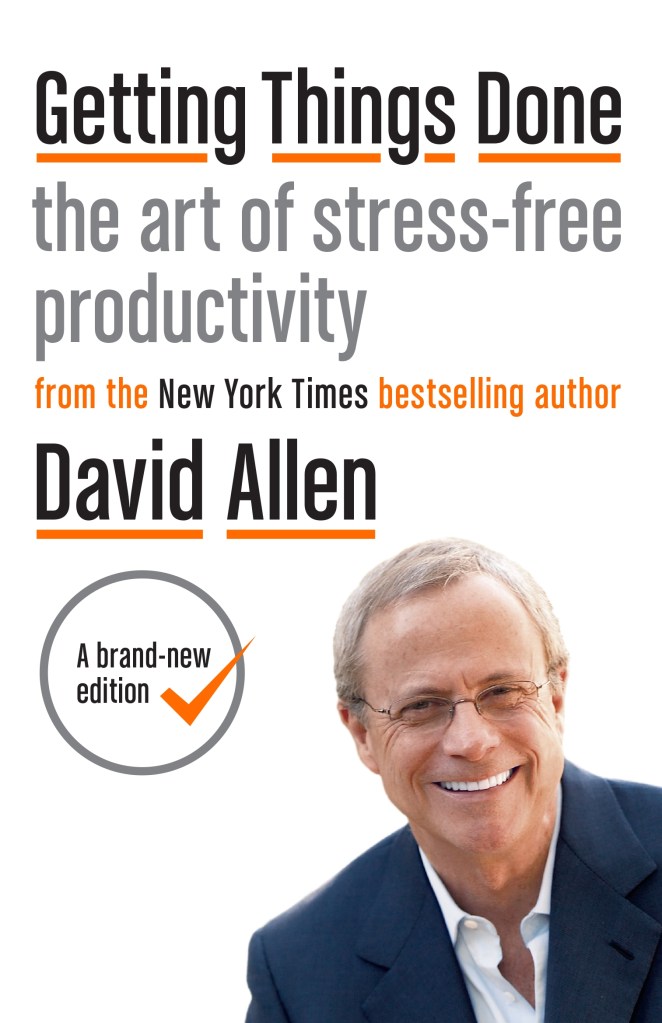
In the book, Getting Things Done: The Art of Stress-Free Productivity (Penguin Books), David Allen presents his personal productivity methodology that transforms the way you approach your personal and professional life. This practical guide to increasing your productivity and reducing your stress will help you learn about the value of focusing on action, decluttering your mind, saying ‘no’ more often, creating simple and streamlined task lists, and clarifying what you want to accomplish.
Highlights:
- A New Practice for a New Reality- Open Loop is anything that does not belong where it is, the way it is, will pull on your attention if it’s not appropriately managed. The Open Loops are controlled either:
Horizontally – maintains control across all the activities in which you are involved; on the order of the day-to-day activities
Vertically – manages thinking, development, and coordination of individual topics and projects; on the order of larger goals.
Three Key Objectives For Getting Things Done are:
a) Capture everything that may need to be done or valuable in an organized, trusted system out of your head.
b) Make front-end decisions about your “inputs” to create an inventory of “next actions” that can be implemented or changed.
c) Curate and coordinate all of that work among the commitments that you have with yourself and others.
2. Getting Control of your Life- The Five Stages of Mastering Workflow:
- Capture what has your attention.
- Clarify what each item means and put it where it belongs.
- Organize the results to focus on higher-level thinking.
- Reflect on keeping your system operational.
- Engage in deciding what to get done.
3. Getting Projects Creatively under way– The Five Phases of Project Planning
- Defining Purpose and Principles
- Outcome Visioning
- Brainstorming
- Organizing
- Identifying Next Actions
4. Getting started-
You should get the time, space, and tools to make the Getting Things Done system functional. You need to choose a non-negotiable time schedule, a dedicated and self-contained workspace and basic tools.
5. Capturing: Corralling Your Stuff-
When we capture everything that has our attention, we will have control, be present, and focus on the most critical work. Successful capture involves the action of collecting all the physical things into your physical ‘In’ basket and the action of clearing your mind of what has your attention.
6. Clarifying: Getting ‘In’ to Empty-
You need to process the “in” bucket so as to process the top items first, to process items one by one and to ensure nothing goes back to the basket. You need to have a distinction in actionable and non-actionable items.
7. Organizing: Setting up the Right Buckets-
Being organized means where an item is located matches what it means to you. The Getting Things Done organization allows you to reduce your cognitive load and focus your mind on higher-level thinking. For organization, you need lists and folders.
8. Reflecting: Keeping it all Fresh and Functional-
After organizing your system, a review process will allow you to operate and maintain your system. It will help you have a focused and proactive mindset about getting things done. You need to have three kinds of review systems: Daily, Weekly and Big Picture reviews. Projects and Tasks are two different things: track them separately.
9. Engaging: Making the Best Action Choices-
You have to choose the actions in the moment considering context, time available, energy available and priority. You also need to evaluate whether what you’re doing aligns with your priorities.
10. Getting Projects under Control-
You need to continuously keep on planning about projects that still have your attention even after figuring out the next actions as well as projects that may have unexpected practical ideas and supportive detail. You also need tools to manage the random ideas coming up so as to maintain your control. If your daily life is out of control, it’s almost impossible to think strategically or plan effectively.
11. The Power of the Capturing Habit-
Regarding capturing, you can feel overwhelmed with things to do, especially when you break commitments with yourself. It becomes very important to handle smartly the agreements and commitments you make. Build a trusted system that helps you keep track of your commitments.
12. The Power of the Next-Action Decision-
The key to handling big projects is not to focus on everything that has to be done. Instead, just focus on the very next physical action you need to take. The clarity about the next action helps you build an accountability structure. It also empowers you and improves productivity.
13. The Power of the Outcome Focusing-
Imagination can help people achieve their goals, as it narrows their focus and ability to execute the actions needed. A vision for the future will help you figure out what or the actions to accomplish the vision.
Courtesy:
 Expressions and Impressions
Hi Sir, goan through your review. I hav highly impressed following 1. Projects and Tasks are two different things: track them separately
2. If your daily life is out of control, it’s almost impossible to think strategically or plan effectively.
I just wanted to add to your point No 3 (Getting Projects Creatively under way) before starting the project we hav to excercise SWOC analysis, it would be helpful to make better planning
Thanks !!
LikeLiked by 1 person
Dear Abhijit ji,
Your reflections on the book ‘Getting Things Done’ underline your earnest desire to learn managing things without getting stressed. While it is crucial for every civil servant to be mindful while managing a wide variety of things on a daily basis without getting stressed, very few succeed in being so. As a sincere, hardworking and versatile administrator, you stand apart, not merely because you persistently try to update your knowledge and learn new skills to discharge your duties effectively and efficiently by reading relevant books but also because you keep sharing the same through your blog. Accolades to you.
Warm regards,
Sanjeev Sagrolikar
LikeLiked by 1 person