Some films demand analysis. Others demand silence. And a rare few, like Nanpakal Nerathu Mayakkam (Like An Afternoon Nap), ask you to surrender—to the haze, to the rhythm, and to the mysterious in-between spaces of identity, memory, and language. Directed by Lijo Jose Pellissery, known for his flamboyant, chaotic storytelling, this film is the exact opposite—slow, quiet, still. And yet, it unsettles you more than any loud thriller ever could.
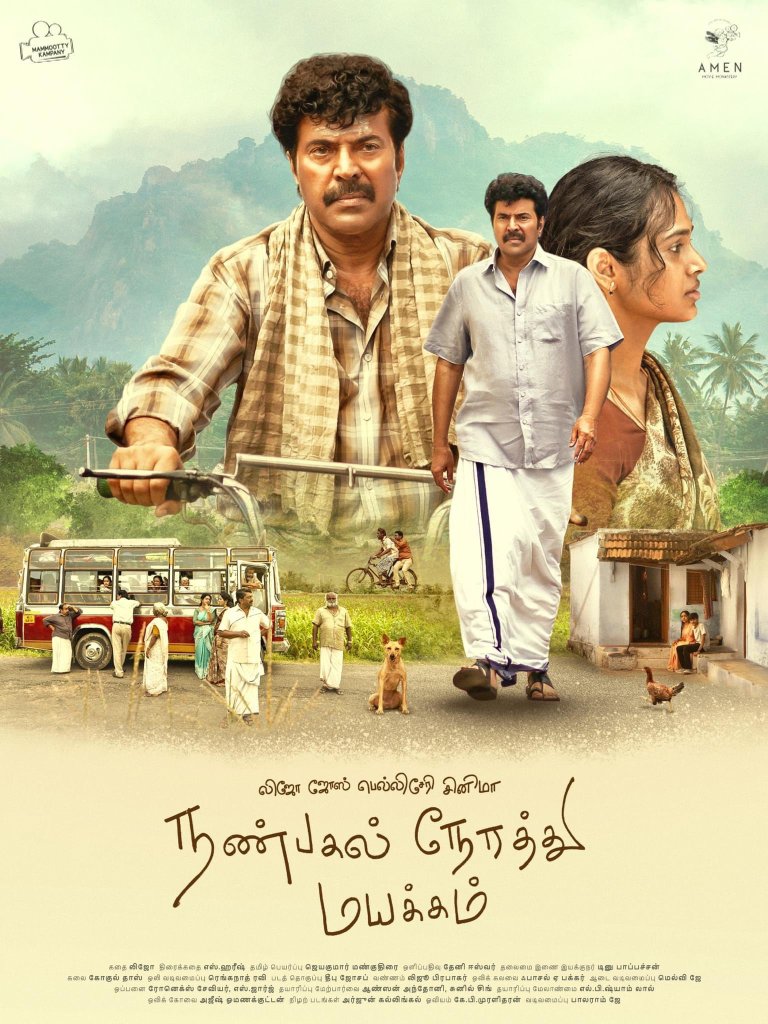
James (played hauntingly well by Mammootty) is a Malayali returning home from Velankanni after a pilgrimage. Mid-journey, while everyone on the bus naps through the hot Tamil afternoon, James wakes up, steps out into a village, and simply… becomes someone else. A Tamil man named Sundaram. There is no dramatic transformation. No supernatural visual effects. The switch is quiet, almost banal. But in that silence lies the most profound question: Who are we, really, when language and memory dissolve? James/Sundaram does not behave like someone possessed. He simply resumes another life—as if he’s returned to where he belongs. A man caught in the nap between two identities. This isn’t amnesia. This is metaphysical migration.
The brilliance of this film lies in what it doesn’t do. It doesn’t explain. It doesn’t judge. There is no psychiatrist to rationalize James’ condition. No flashback to tell us why this happened. The camera lingers—on corridors, cows, temple walls, and old women gossiping in doorways. The static frames echo theatre and early cinema- This movie is a masterpiece in Cinematography (Hats off to Theni Eswar), especially the scene where a couple chases Sundaram. It’s a film that forces you to slow down and feel the rhythm of the village, where time is fluid and identity floats. And then there is a character like on other- a constantly chattering TV which creates an enigmatic background sound. Also let’s not forget the use of old Tamil/Malayalam melodies in the background- simply surreal!
James/Sundaram becomes a metaphor for cultural overlap—a man literally walking between not just two bodies or two souls, but between two languages, two personalities, two religions, two cultures and two different worlds. The subtle political commentary on linguistic and regional identities adds depth without turning preachy. It’s also about grief and unfinished stories. Sundaram’s Tamil family is stunned yet welcoming, as if their long-lost member had finally come home. The Malayali family, confused and heartbroken, watches him from a distance, unsure whether to mourn or intervene.
Nanpakal Nerathu Mayakkam uses a nap—yes, a nap—as a portal to explore identity, memory, and collective unconscious. In this story, drowsiness replaces plot. The film ends not with answers, but with a sense of still wonder. Did James dream Sundaram, or was it the other way around? Lijo’s cinema here is not meant to be “understood”—it is meant to be felt, lived, and maybe… dreamt again.
 Expressions and Impressions
Leave a comment