Pratikshya, an Odia film produced and directed by Anupam Patnaik that unfolds with quiet grace, is less a story and more a lived feeling. Based on a story ‘Bapa’ by Gourhari Das, this film does not rush to impress or overwhelm; instead, it invites the viewer to slow down, to sit with silence, and to reflect on the unspoken tensions that define ordinary lives. Rooted in realism and emotional restraint, the film gently reminds us that some of the most profound human conflicts unfold not in dramatic moments, but in long periods of waiting.
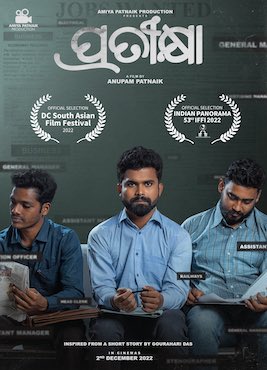
At the heart of Pratikshya lies a simple yet unsettling storyline. Sanjay, a young unemployed man, lives with his aging and ailing father in Bhubaneswar. Like many middle-class youths, he dreams of securing a government job; an emblem of stability, dignity, and social approval. His life revolves around preparation, hope, and repeated disappointment. Beneath this routine, however, lies a darker, uncomfortable truth: Sanjay’s future prospects are tied to his father’s retirement — and in some ways, his death. The film never sensationalizes this idea; it allows it to linger quietly, making the discomfort feel deeply real.
Characters in this movie are not human caricatures. They represent emotional landscapes. Sanjay’s journey unfolds through quiet inner conflict rather than visible action; though neither cruel nor selfish, he remains caught between ambition and conscience, as his desire for security slowly turns into moral unease, reflecting the vulnerability of a generation weighed down by expectations and limited choices. In contrast, his father Bipin becomes the film’s emotional anchor—gentle, observant, and rooted in lived wisdom—bringing warmth and dignity even as his failing health looms, with his values expressed through silence, patience, and small gestures, creating a tender and deeply human counterpoint to Sanjay’s restless anxiety.
The thematic core of Pratikshya revolves around waiting, not merely as a phase of life, but as a condition of existence. The film explores how prolonged anticipation can reshape relationships, distort values, and blur the line between hope and guilt. It also reflects on middle-class aspirations, generational dependency, and the emotional cost of measuring life through milestones like jobs, promotions, and security. Silence, routine, and stillness become powerful narrative tools, allowing emotions to surface organically.
Instead of dramatizing external action, the film dwells on quiet emotional shifts — Sanjay’s longing for security, his internal clash between ambition and moral conscience, and the subtle but aching bonds that tether him to his father. This kind of storytelling is not about moment-to-moment excitement; it’s about the emotional interiority of characters navigating ordinary life pressures: a theme that resonates especially within Indian middle-class realities.
In the end, Pratikshya does not offer easy resolutions or dramatic closure. Instead, it leaves the viewer with a lingering introspection; about ambition, responsibility, and the quiet sacrifices that often go unnoticed. Like life itself, the film resists neat answers. It simply holds up a mirror, asking us to reflect on what we are waiting for, and what we may be losing while we wait.
 Expressions and Impressions
Leave a comment