Spain’s Symphony Ends in World Cup Glory
The 2026 FIFA World Cup marked the beginning of a new era for international football. Co-hosted by Canada, Mexico, and the United States, it became the first World Cup to feature 48 teams, expanding the competition from the traditional 32-team format. The teams were divided into 12 groups of four, with the top two teams from each group along with the eight best third-placed teams advancing to a newly introduced Round of 32. While the expanded format resulted in a longer tournament, it also offered more nations the opportunity to compete on football’s biggest stage, producing fresh stories, new rivalries, and an absorbing mix of expected outcomes and memorable surprises.
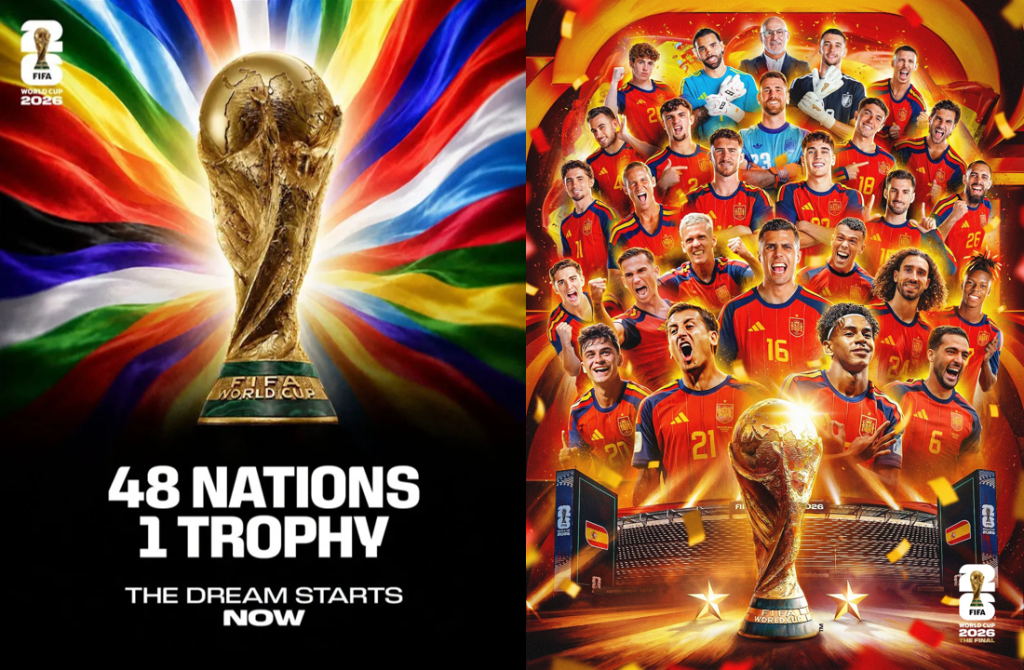
(Image courtesy: FIFA)
League Stage- Few hiccups but mostly predictable
The expanded 48-team FIFA World Cup inevitably meant a longer league stage than the traditional 32-team format. While it demanded more patience from fans, it also produced a richer, more competitive tournament. Most of the favourites eventually progressed: some aided by the expanded system that allowed the best eight third-placed teams into the Round of 32. But there were enough surprises to remind everyone why the World Cup remains football’s greatest spectacle.
Group A: Group A was competitive throughout, but hosts Mexico were the most clinical side, deservedly topping the group. South Africa recovered well after an inconsistent start to qualify, while South Korea and Czechia never really found their rhythm and exited without making the desired impact.
Group B: Switzerland were far from their fluent best but still managed to finish on top. Canada and Bosnia & Herzegovina scraped through, ensuring the group largely followed expectations despite some nervy performances.
Group C: The heavyweights did not disappoint. Giant Brazil and Morocco, the standout team from the 2022 World Cup, qualified with relative ease and looked well prepared for the knockout rounds.
Group D: One of the more interesting groups of the tournament. Co-hosts USA finished first, despite being shocked by Turkiye. Paraguay and Australia managed to qualify, while Turkiye narrowly missed out despite producing spirited performance.
Group E: Germany and Ivory Coast were not particularly convincing, yet both did enough to progress. Ecuador recovered impressively after a difficult start to secure qualification.
Group F: The Netherlands qualified but rarely looked comfortable, often appearing rusty. Japan and Sweden both earned deserved places in the Round of 32 after disciplined campaigns.
Group G: Belgium and Egypt occupied the top two places and advanced comfortably. Iran displayed admirable fighting spirit throughout the group stage but ultimately fell short of qualification.
Group H: Spain recovered brilliantly after an early stutter to dominate the group. Cape Verde became one of the stories of the tournament, earning qualification with three draws and winning plenty of admirers along the way. Uruguay’s elimination was among the biggest surprises of the group stage.
Group I: The only group without a single drawn match. As expected, France were ruthless and Norway equally impressive as both secured the top two spots. Senegal managed to scrape through into the knockout rounds.
Group J: Defending champions Argentina topped the group with authority. Austria and Algeria also progressed after consistent performances.
Group K: Colombia impressed throughout and deservedly finished first. Portugal looked below their usual standards but still secured second place, while DR Congo became another inspiring underdog story by reaching the Round of 32.
Group L: England and Croatia qualified for the Round of 32 much as expected. Ghana also advanced courtesy of the best third-placed teams quota.
Round of 32 – Absolute Cinema
If the league stage laid the foundation, the Round of 32 reminded everyone why knockout football is unmatched.
The action began with hosts Canada defeating a promising South African side to book their place in the Round of 16. Brazil were given an early scare by Japan before eventually prevailing 2-1.
June 29 produced the tournament’s biggest shocks. The first casualty was 2014 champions Germany. A resilient Paraguay held the Germans to a 1-1 draw through regular and extra time before keeping their composure to win the penalty shootout 4-2. Just hours later came another seismic upset as the Netherlands were eliminated by Morocco. The Atlas Lions found a dramatic late equaliser before prevailing 3-2 in the shootout. A tactical battle eventually exploded into penalty drama as Morocco once again showcased their defensive resilience and mental strength, underlining that the 2022 dream run wasn’t a fluke.
Erling Haaland struck in the closing minutes as Norway edged Ivory Coast 2-1, while France made light work of Sweden with an emphatic 3-0 victory. Mexico comfortably defeated Ecuador 2-0. Harry Kane’s brace broke the hearts of DR Congo, who had led 1-0 until the 74th minute before England mounted a memorable comeback.
One of the most dramatic knockout encounters saw Belgium survive a fierce challenge from Senegal in a remarkable five-goal thriller. Trailing 2-0 after the 85th minute, Romelu Lukaku pulled one back before Youri Tielemans equalised in the 89th minute. A much-discussed penalty eventually helped Belgium clinch a last-gasp victory.
The United States gave Bosnia & Herzegovina little opportunity in a commanding 2-0 win. Spain were at their devastating best, thrashing Austria 3-0 thanks to Mikel Oyarzabal’s brace. Portugal also left it late in a pulsating encounter after Croatia had taken the lead. Cristiano Ronaldo’s equaliser followed by Gonçalo Ramos’ injury-time winner brought Croatia’s promising campaign to an end.
Switzerland progressed past Algeria with a comfortable 2-0 victory. Egypt stunned Australia by winning the penalty shootout 4-2 after equalising during regular and extra time.
What many expected to be a routine Argentine victory instead became one of the tournament’s greatest fairytales. Cape Verde pushed the defending champions into extra time with fearless football and exceptional defending, while veteran goalkeeper Vozinha produced a string of remarkable saves. Argentina eventually scraped through 3-2, but Cape Verde left the tournament with immense respect from the footballing world. The Round of 32 concluded with Colombia edging Ghana 1-0 to complete the Round of 16 lineup.
Round of 16: The Race Begins
After eliminating the Netherlands in the previous round, Morocco dismantled Canada (3-0) with confidence rather than caution. Their blend of technical quality, tactical discipline and fearless attacking football has made them one of the most entertaining teams left in the competition.
Meanwhile, France kept doing what champions do: finding a way through without unnecessary drama. Paraguay had already shocked Germany and entered with enormous confidence, but France controlled the contest patiently before sealing another narrow knockout victory.
The biggest headline came from Norway, who have transformed from dark horses into genuine title contenders. Erling Haaland’s side stunned five-time champions Brazil 2-1 in a performance built on discipline, physicality, ruthless finishing and a collective belief that they belong among football’s elite. Haaland once again proved why the world’s best defenders still struggle to contain him, while Brazil were left wondering how another promising World Cup campaign slipped away.
If Norway’s victory was a statement, England’s win over co-hosts Mexico was an exhibition of character. Leading comfortably before going down to ten men, England refused to surrender despite an inspired Mexican comeback in the intimidating atmosphere of the Azteca. Jude Bellingham delivered when it mattered most, Harry Kane added another crucial goal, and Jordan Pickford stood firm during the final assault. Mexico’s dream ended in heartbreak despite being the better team on most occasions, but they exited with immense pride after bringing the nation together throughout the tournament.
Spain edged past neighbours Portugal in another chapter of the Iberian rivalry. It was a contest defined by tactical discipline rather than attacking fireworks, with Spain’s patient possession eventually breaking Portuguese resistance, thanks to Torres’ wonderful assist resulting in Merino’s last minute beauty. For Portugal, it marked the end of an era as Cristiano Ronaldo’s final World Cup appearance concluded in disappointment. Spain, meanwhile, once again demonstrated why they remain one of the tournament favourites.
Belgium made the loudest statement of the Round of 16, not letting the Red card recall controversy affect them. Their emphatic 4-1 victory over the United States was as clinical as it was convincing. Belgium attacked with pace, precision and confidence, exposing every defensive lapse while showing the kind of ruthlessness that wins knockout tournaments. The United States had impressed during the group stage and Round of 32, but Belgium’s experience and superior quality proved too much on the night.
Few teams have embraced drama quite like Argentina, and they delivered another emotional rollercoaster against Egypt. Trailing early and facing the possibility of a shock elimination, Lionel Messi and team once again dictated the rhythm when it mattered most, inspiring Argentina to a 3-2 comeback victory. Egypt may leave the tournament with their heads held high, having pushed one of football’s giants to the very limit, but Argentina once again showed that champions possess an extraordinary ability to survive even when they are far from their best. However the match was marred by a series of controversial VAR decisions, with debates continuing long after the final whistle.
The final quarter-final berth went to Switzerland, though only after one of the most evenly contested matches of the tournament. Colombia matched the Swiss in every department, creating chances and defending resolutely before the game drifted into penalties. In the shootout, Switzerland held their nerve to prevail, proving once again that knockout football is often decided by composure rather than brilliance. Colombia’s journey ended in heartbreak, but they exit with immense credit after another spirited World Cup campaign.
Quarter-finals: Glory and Goodbye
Morocco’s extraordinary journey finally came to an end, but not before they had once again reminded the world why they had become one of the tournament’s most admired teams. France, however, showed the difference between a great story and a champion’s mentality. An Mbappe breakthrough allowed Les Bleus to dictate the tempo, while Dumbele’s well-crafted goal minutes after that put the contest beyond doubt. Their midfield controlled possession intelligently, the defence remained compact, and Morocco found very few clear openings despite their relentless effort. Morocco left with their heads held high; France marched on with the confidence of a team that knew exactly what was required.
Perhaps the most anticipated tactical battle of the quarter-finals lived up to expectations. Belgium, after eliminating the United States and producing one of the tournament’s most entertaining attacks, looked capable of going all the way. Spain, though, once again demonstrated why patience remains their greatest weapon. Crisp passing, intelligent movement and relentless ball retention gradually wore Belgium down before Fabian found the opening goal. Belgium responded with an equaliser by de Ketelaere that reignited the contest, but Spain’s flowing combination play produced a decisive winner. It was the Super-Sub Merino again with a 88th minute stunner that sealed the match. It was a match rich in tactical adjustments and technical quality, with Spain’s composure in possession ultimately proving decisive.
Having already written one of the stories of the World Cup, Norway were once again fearless versus England, pressing aggressively and threatening through quick transitions. England struck first with a well-worked attacking move, only for Norway to draw level courtesy Schjelderup and set up a tense finish. As the intensity increased, England’s experience showed. They remained patient, created sustained pressure through the wings, and eventually found the winning goal. Bellingham was the star scoring a brace. The match also had a fair amount of controversy with Haaland’s foul and the camera cable touch being discussed hotly.
By the time Argentina walked onto the pitch, there was a growing sense that destiny might once again be wearing sky blue and white. Switzerland had frustrated opponents throughout the tournament with disciplined defending, but Argentina’s attacking rhythm was simply irresistible. Starting with quick interchanges, clever movement between the lines and incisive passing, Mac Allister produced an early advantage before Switzerland tied with Ndoye’s goal and and threatened a comeback. Argentina responded immediately, restoring control with another beautifully constructed attack but the Swiss made them wait till the second half of Extra time when Alvarez finally came to party with a booming kick. Lautaro Martinez score the third one sealing the victory late in the game. It was their most complete attacking display of the knockout stage, combining flair with clinical finishing, and it carried them confidently into another World Cup semi-final.
Semi-finals: The Last Four Standing
Spain 2–0 France
Entering into the match, aggressive and consistent France were the favourites but Spain once again underlined why they have been the tournament’s most complete side, producing a composed and clinical 2–0 victory. Oyarzabal converted the much debated penalty to earn lead in 22nd minute. However the spectacular second half goal by Porro was the true highlight of the match. Spain’s trademark possession-based football was on full display as the midfield dictated the tempo, patiently moving the ball and denying France any sustained control. Every attack carried purpose, while the defensive unit remained compact and disciplined, frustrating the French forwards throughout the contest. Spain’s ability to seamlessly transition from defence to attack reflected the confidence and cohesion that have defined their campaign.
France entered the match hoping to use their pace and attacking flair to unsettle the Spanish defence, but clear-cut opportunities were few and far between. Spain’s relentless pressing and intelligent positioning forced errors, while their clinical finishing ensured they capitalized on the chances that mattered. Recording yet another clean sheet, La Roja demonstrated that they are not only aesthetically pleasing to watch but also remarkably efficient. With six shutouts in seven matches and growing momentum, Spain advanced to the final looking every bit like deserving favourites to lift the trophy.
Argentina 2–1 England
The second semi-final delivered everything football fans could have hoped for: high intensity, fierce rivalry, emotional swings, and a dramatic finish worthy of the World Cup stage. England looked set to reach their first World Cup final since 1966 after taking the lead through Anthony Gordon and defending resolutely for much of the second half. They combined disciplined defending with dangerous counterattacks, forcing Argentina to search patiently for an opening as the clock ticked down.
Just when England appeared to have one foot in the final with 5 minutes of regular play left, Argentina’s champion mentality came to the fore. Enzo Fernández ignited hopes with a well-taken equaliser in the closing minutes before Lionel Messi produced another moment of magic, delivering a perfectly weighted cross that Lautaro Martínez headed home in stoppage time. The stunning late turnaround showcased Argentina’s resilience, belief, and ability to thrive under immense pressure. Once again, Messi proved to be the heartbeat of the Albiceleste, guiding them into another World Cup final where a mouth-watering showdown with Spain now awaits. However even this match was also not without controversy with some debatable calls.
Third Place Match: Fight for the Consolation Prize
The bronze medal match between England and France produced one of the most exhilarating spectacles in FIFA World Cup history, with England prevailing 6–4 in a breathtaking contest that featured relentless attacking football and a record ten goals in a World Cup third-place playoff. Declan Rice ignited the fireworks in the 3rd minute, before Ezri Konsa doubled the lead in the 18th. Bukayo Saka then stole the spotlight with strikes in the 37th and 46th minutes, giving England what looked like an unassailable 4–0 advantage, with Les Blues looking absolutely clueless. Yet the game was only just beginning. Kylian Mbappé sparked an extraordinary French revival with goals in the 48th and 66th minutes, while Bradley Barcola‘s 54th-minute finish narrowed the gap further, transforming what had seemed a procession into an edge-of-the-seat thriller.
France continued to throw everything forward, and although Saka completed his magnificent hat-trick from the penalty spot in the 87th minute, the drama intensified in stoppage time. Ousmane Dembélé struck in the 96th minute to make it 5–4, raising hopes of an improbable comeback, only for Jude Bellingham to deliver the final blow with England’s sixth goal in the 98th minute. The match encapsulated the carefree, attack-minded spirit often associated with third-place playoffs, but this one rose far above expectations: a rollercoaster of momentum swings, individual brilliance, and fearless football. England walked away with the bronze medal, while fans around the world were treated to a goalfest that will long be remembered as one of the most entertaining matches of the 2026 FIFA World Cup.
The Grand Finale: La Roja Triumphs!
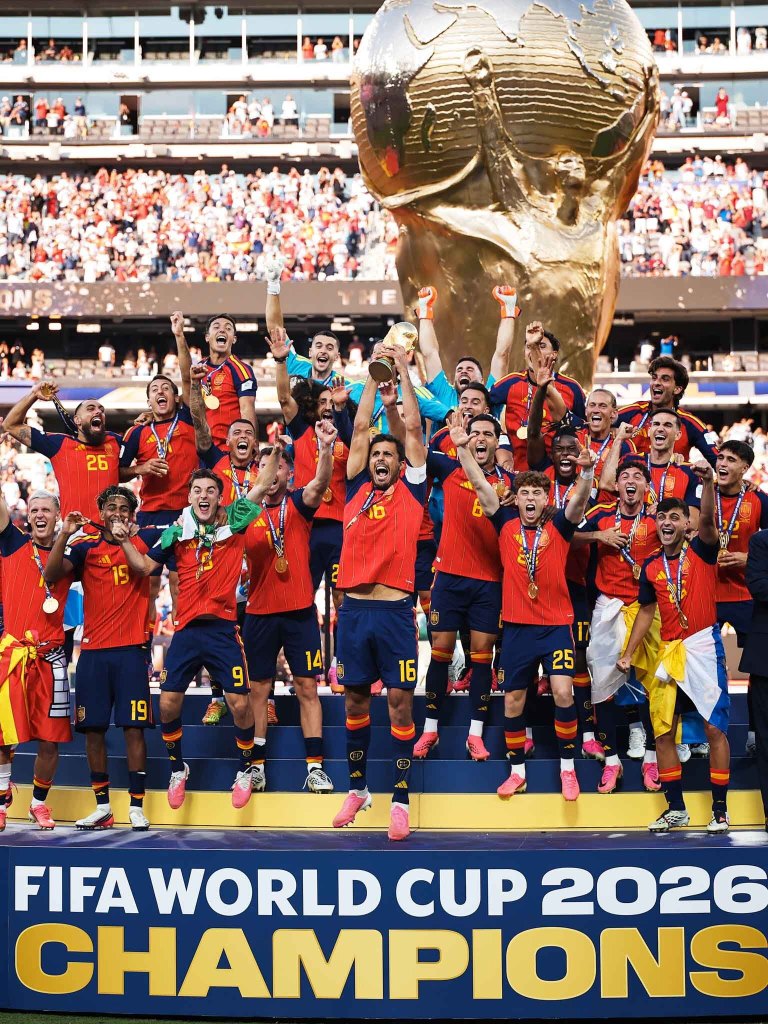
Image Courtesy: FIFA
From the opening whistle, the 2026 FIFA World Cup Final unfolded as a fascinating battle of contrasting footballing philosophies. Spain, true to their identity, monopolised possession with relentless precision, circulating the ball patiently while pressing high every time they lost it. Argentina, usually so comfortable dictating games themselves, were forced into an unfamiliar waiting game, spending long spells chasing shadows rather than creating them. La Roja’s trademark possession football returned in its purest form. The Spanish midfield trio controlled the rhythm with remarkable composure, constantly finding passing lanes and denying Lionel Messi the freedom that has defined so many of his greatest performances. Rarely has Messi been kept so quiet on the biggest stage, with Spain’s compact pressing ensuring that every touch he received came under immediate pressure. Argentina’s attacking stars found themselves isolated, while Spain calmly dictated the tempo almost throughout the contest.
Spain’s dominance created chance after chance, but Emiliano Martínez almost single-handedly kept Argentina alive with a series of outstanding saves. The Argentine goalkeeper denied Yamal from close range, reacted brilliantly to Rodri’s long-range drive and frustrated Nico Williams with another sharp stop after a flowing Spanish move. Argentina’s evening became even more difficult after a red card forced the South Americans to chase the game with ten men. However Argentina managed to keep it 0-0 after regular time despite no scoring shot thanks to Emiliano.
After the extra time began, Williams managed to find the net but the goal was ruled out after a debatable foul was detected in the build-up, keeping Argentina’s hopes alive. Spain however continued with relentless pressing and midfield control. And then finally the magic moment arrived in the first minute in second half of extra time. Despite Martínez’s heroics, another spell of patient Spanish possession carved open the defence and Ferran Torres calmly finished the move, giving Spain the lead they had thoroughly deserved. The 106th minute goal perfectly reflected Spain’s footballing philosophy: constructed through intelligence, patience and movement rather than individual brilliance alone.
Responding to it, desperate Argentina abandoned caution in the closing stages and launched wave after wave of attacks. However, Torres beat the goalkeeper again in the 113th minute, but the celebrations were cut short as the offside flag denied him a second goal. Deep into stoppage time came La Albiceleste’s best opportunity of the night, as a dangerous delivery into the Spanish penalty area created panic before the final effort narrowly missed the target. It was a dramatic final push that briefly raised hopes of an equaliser, but Spain’s disciplined backline, marshalled superbly by Cubarsí, stood firm to preserve the slender advantage.
Spain’s victory was about far more than a solitary goal. They became world champions because they completely controlled the midfield, where Rodri produced a masterclass in positioning and distribution while orchestrating the midfield like a conductor, allowing Spain to dominate possession while suffocating Argentina’s creativity. Yamal and Nico Williams constantly stretched the pitch, Cucurella offered endless energy on the overlap, and Cubarsí delivered a defensive performance of remarkable composure. Even the brilliance of Emiliano Martínez could only delay the inevitable. By stifling Messi, forcing Argentina into reactive football and remaining faithful to their possession-based philosophy from the first minute to the last, Spain produced a champion’s performance. Spain personified control amid chaos, with their collective brilliance and tactical discipline neutralising the attacking threats of three of world football’s greatest superstars in the knockouts- Cristiano Ronaldo, Kylian Mbappé and Lionel Messi. It was a fitting culmination of a tournament in which La Roja consistently proved themselves to be the finest footballing side in the world.
Best Matches So Far (Chronologically)
- Portugal 2–1 Croatia (League)
- Morocco 1–1 Netherlands (Morocco won 3–2 on penalties) (R32)
- Belgium 3–2 Senegal (AET) (R32)
- Argentina 3–2 Cape Verde (AET) (R32)
- Brazil 1–2 Norway (R16)
- Mexico 2–3 England (R16)
- Switzerland 0–0 Colombia (Switzerland won 4–3 on penalties) (R16)
- Spain 2–1 Belgium (QF)
- Spain 2–0 France (SF)
- Argentina 2–1 England (SF)
- Spain 1-0 Argentina (AET) (Final)
Standout Teams
- Spain
- Argentina
- France
- England
- Norway
- Morocco
Surprise teams
- Paraguay
- Egypt
- Cape Verde
Biggest Disappointments
- Germany
- Netherlands
- Croatia
Standout Players
- Erling Haaland – the tournament’s breakout star.
- Kylian Mbappe – continued golden run.
- Jude Bellingham, Harry Kane – consistently delivering for England.
- Vozhinha, Orlando Gill – outstanding saves from both Keepers.
- Lionel Messi – continuing to inspire Argentina.
- Rodri and his team – exemplary display of teamwork.
 Expressions and Impressions
Nicely narrated Abhijit !!
LikeLiked by 1 person
nice writings,but iwant to add that iran was also a good team.
LikeLiked by 1 person
Nice
LikeLiked by 1 person