In our fast-paced world full of distractions, maintaining focus and attention can be a constant challenge. Whether you’re a student, a professional, or someone managing a busy household, being able to concentrate on the task at hand is key to productivity, efficiency, and peace of mind. The good news is that focus is not just a natural ability—it’s a skill that can be improved with the right strategies. Using the helpful acronyms FOCUS and BETTER, here are practical, research-backed tips to help you sharpen your attention and stay on track.
(Sourced from an infographic by Mental Health Center Kids)
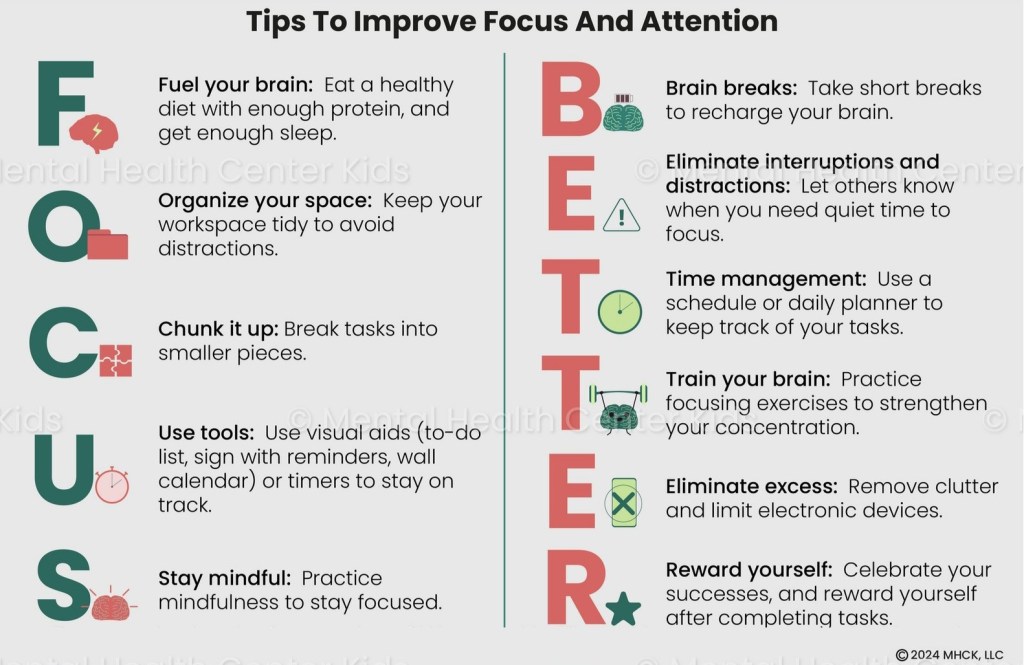
Image source: Mental Health Center Kids
FOCUS: Five Steps to Strengthen Concentration

Start with the basics—your brain needs the right fuel. Eat a balanced diet rich in protein, stay hydrated, and ensure you get adequate sleep each night. A well-rested, nourished brain is far more capable of focusing than one that’s tired or hungry.

Clutter creates chaos. A tidy, well-organized workspace helps eliminate distractions and signals to your brain that it’s time to work. Take a few minutes each day to declutter your desk or digital workspace.

Large tasks can feel overwhelming. Break them into smaller, manageable parts. This approach—often called “chunking”—not only makes work feel more achievable but also creates a clear sense of progress.

Visual aids like to-do lists, reminders, wall calendars, or timers can help you stay focused and on schedule. Tools create external structure, making it easier to maintain attention and track your progress.

Mindfulness practices, such as deep breathing or short meditation sessions, help train your attention and reduce stress. Practicing mindfulness regularly improves your ability to remain present and resist distractions.
BETTER: Six Ways to Build Stronger Mental Habits

Taking short, intentional breaks helps your brain reset and recharge. Step away for a few minutes—stretch, take a walk, or simply breathe. Breaks can actually improve focus when you return to your task.

Let those around you know when you need uninterrupted time. Silence notifications, close unnecessary tabs, and communicate boundaries—especially during deep-focus tasks.

Using a planner or daily schedule helps you prioritize and allocate time effectively. Planning your day ahead reduces decision fatigue and ensures important tasks get done.

Focus is like a muscle—it gets stronger with practice. Simple exercises like reading without distractions, solving puzzles, or using focus apps can help increase your attention span over time.

Remove unnecessary clutter, both physical and digital. Limiting screen time, turning off nonessential notifications, and decluttering your environment can reduce mental overload and help you stay focused.

Acknowledging your progress boosts motivation. Whether it’s a short break, a favorite snack, or simply checking off a task, rewards give your brain positive reinforcement to keep going.
Improving focus and attention is not about being perfect—it’s about making small, consistent changes that support your mental clarity. By applying the FOCUS and BETTER strategies, you create a supportive environment and mindset that encourages productivity and balance. Remember, it’s okay to have off days. What matters most is that you keep showing up for yourself with patience, structure, and intention. Focus isn’t a gift—it’s a habit you can build, one step at a time.
 Expressions and Impressions
Excellent formulas
F
O
C
U
S
B
E
TT
E
R
Thank you 🙏👍
LikeLike
helpful for improving focus and discipline
LikeLiked by 1 person
All points to improve focus and attention are very helpful.
LikeLiked by 1 person
Good points to Focus Better
LikeLiked by 1 person
Respected sir your articles are very useful and interesting as usual.
LikeLiked by 1 person