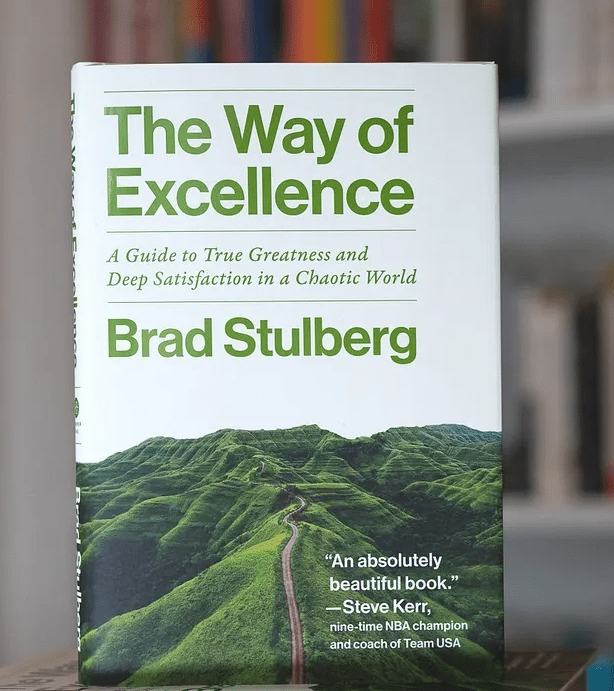
In a world obsessed with quick success and instant results, the pursuit of true excellence often gets misunderstood. Many believe excellence is reserved for the gifted or naturally talented, but Brad Stulberg’s The Way of Excellence challenges this assumption. The book presents excellence not as a destination, but as a disciplined way of living built on consistency, resilience, and intentional growth. It offers a refreshing perspective that shifts focus from shortcuts to sustainable mastery.
Drawing from research, real-life examples, and high-performance principles, Stulberg outlines a practical framework for building lasting success. Rather than promoting hustle culture, the book emphasizes balance, internal values, and long-term development. It serves as a guide for anyone seeking to perform better while staying grounded, healthy, and purpose-driven. At its core, the book teaches that excellence is not about doing more, but about doing what matters, better and consistently.
Highlights
1. Excellence Is a Daily Commitment
Excellence is not achieved through rare bursts of effort. It is built by showing up every day and doing the work even when motivation is low. Small, consistent actions compound into big results over time. Progress often feels slow at first, but patience is part of mastery. The book emphasizes treating improvement as a lifestyle rather than a short-term project.
2. Master the Process Before Chasing Outcomes
High performers focus more on how they work than on what they get. When attention is placed on learning, skill-building, and quality effort, results naturally follow. Obsessing over outcomes creates pressure and anxiety. Process-focused thinking keeps energy directed toward what is controllable. This mindset builds stability and long-term growth.
3. Discomfort Is a Necessary Teacher
Growth requires stepping into uncomfortable situations. Whether it is physical strain, mental challenge, or emotional vulnerability, discomfort signals progress. Avoiding difficulty keeps people stuck at average levels. The book teaches readers to lean into productive struggle. Over time, discomfort becomes a tool rather than an obstacle.
4. Build Strong Personal Standards
True excellence is driven by internal values rather than external applause. When standards come from within, effort remains steady even when no one is watching. This builds integrity and self-respect. The book encourages defining what “good work” means personally. Strong internal standards create consistency across changing circumstances.
5. Energy Management Matters More Than Time Management
Success is not only about working longer hours. It is about managing physical, mental, and emotional energy. Sleep, nutrition, movement, and mental clarity directly affect performance. Without proper energy care, productivity drops. Sustainable excellence comes from protecting and renewing energy regularly.
6. Recovery Is Part of High Performance
Rest is not laziness; it is a performance strategy. The book highlights that growth happens during recovery, not just during effort. Taking breaks prevents burnout and mental fatigue. Reflection, downtime, and deliberate rest improve creativity and focus. Balance helps maintain long-term momentum.
7. Design Your Environment for Success
Willpower alone is unreliable. High performers shape their surroundings to make good habits easier and bad habits harder. Simple changes like removing distractions or creating routines improve consistency. The book shows that environment silently influences behavior. Smart design reduces friction and supports discipline.
8. Identity Shapes Behavior
People act in ways that match how they see themselves. When someone identifies as disciplined, focused, or resilient, behavior naturally follows. The book encourages building an identity around growth and effort. Small wins reinforce this identity over time. Long-term change becomes easier when identity shifts first.
9. Stay Humble and Keep Learning
Excellence is never final. There is always room for improvement. The book promotes curiosity and openness to feedback. Humility prevents stagnation and ego-driven mistakes. Continuous learning keeps skills sharp and mindset flexible. Growth thrives in those who remain students of their craft.
10. Meaning Gives Excellence Its Power
Performance without purpose feels empty. The book emphasizes connecting work to personal meaning and values. When actions serve something bigger than ego or reward, motivation deepens. Purpose provides strength during difficult phases. Meaning turns effort into fulfillment.
The Way of Excellence reminds us that meaningful success is not built overnight. It is shaped through daily discipline, conscious choices, and a commitment to continuous improvement. By focusing on process, values, recovery, and purpose, the book provides a sustainable roadmap for growth. It encourages readers to move beyond short-term wins and build lasting personal standards. Ultimately, excellence becomes less about competing with others and more about becoming a better version of oneself. This timeless message makes the book both practical and deeply inspiring.
 Expressions and Impressions
”It’s refreshing to see a framework for success that actually includes recovery as a performance strategy. Point #6 is the one most people miss. We often treat rest as a reward for finishing work, rather than the fuel that makes the work possible. Thanks for sharing these highlights!”
LikeLiked by 1 person
stunning points elaborated
LikeLiked by 1 person
Excellence is the path of sure life 👍🏻
LikeLiked by 1 person
to build strong personal standerd is too difficult & that’s the key point to move towards the success
LikeLiked by 1 person
Thank You Sir.
Keep guiding.
Dr Balaji Shetty
SGGSIET Nanded. Mh.
LikeLiked by 1 person
Book to read👍
LikeLiked by 1 person
res sir improvment in personality devlopment and succes in life. If follow this key points
LikeLiked by 1 person
Sir, Absolutely agree with this. Excellence is a journey of brining up perfection through discipline.
LikeLiked by 1 person
We must not let negative stories warp the world’s reality; and we should consider how things have improved.
👌
LikeLiked by 1 person