The afternoon sun hung heavy over Eden Gardens. Nearly a hundred thousand spectators sat watching a contest that, on the surface, already seemed decided. The mighty Australia national cricket team had pushed the India national cricket team to the brink of humiliation. The follow-on had been enforced, the scoreboard favoured Australia heavily, and history appeared ready to record yet another routine victory for the side led by Steve Waugh.
Yet, hidden beneath that oppressive Kolkata heat was a script waiting to unfold: a script that would soon produce one of cricket’s greatest acts of defiance, and a match that would be spoken about wherever the game is loved.
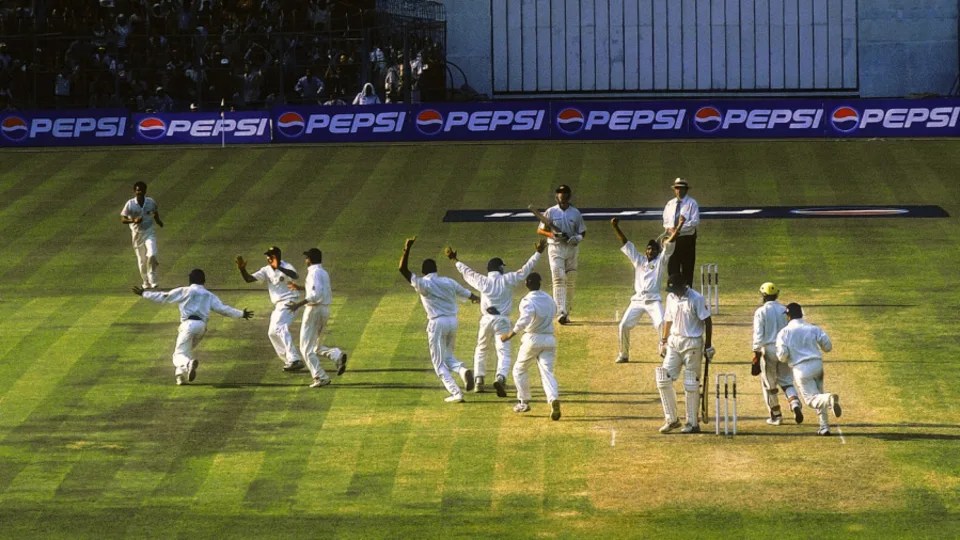
Image courtsey: ESPNCricinfo Hamish Blair Getty Images
Australia arrived in India as the undisputed powerhouse of world cricket. Fresh from their triumph in the 1999 Cricket World Cup, they had won an astonishing sixteen consecutive Test matches. The side led by Steve Waugh was ruthless, disciplined and brimming with players in peak form, none more so than Matthew Hayden.
India, in contrast, looked vulnerable. The legendary spinner Anil Kumble was unavailable, and pace spearhead Javagal Srinath featured only briefly in the series. The spin attack was relatively inexperienced. The first Test in Mumbai ended exactly as many expected: Australia winning comfortably by ten wickets. When the teams assembled in Kolkata, the momentum was firmly with the visitors.
Australia won the toss and chose to bat. The opening pair of Matthew Hayden and Michael Slater laid a solid foundation with a 103-run stand. Hayden in particular used the sweep shot with remarkable authority, racing to 97. India seemed to be drifting out of the game.
Then, during the third session, something extraordinary happened. A young, lanky off-spinner named Harbhajan Singh produced a moment that would become part of cricketing folklore. He dismissed Ricky Ponting, Adam Gilchrist and Shane Warne in successive deliveries, making it the first Test hat-trick by an Indian bowler.
Suddenly Australia were 252 for 7. But great teams rarely collapse entirely. Captain Steve Waugh marshalled the lower order with typical resolve, shepherding the tail to a formidable 445. Waugh himself was the last man out for a gritty 110.
India’s first innings unravelled quickly. The top order including Sachin Tendulkar was back in the pavilion within fifty runs. Sourav Ganguly and Rahul Dravid attempted to steady the innings but departed in quick succession. VVS Laxman showed resistance with a fighting 59, yet India were eventually bundled out for 171, conceding a massive lead of 274.
What followed seemed inevitable. Even under the scorching March sun, Steve Waugh and Coach John Buchanan chose to enforce the follow-on, confident of finishing the job quickly.
But cricket, like life, occasionally reserves its most dramatic turns for moments when defeat appears certain.
India’s second innings began with quiet defiance. The openers negotiated the Australian pace attack with patience before falling after getting starts. Tendulkar managed only ten. A partnership between Ganguly and Laxman added 117 runs, offering a glimmer of hope. But when Ganguly departed, India still trailed by 42 runs. The situation remained precarious.
Then came the moment that would redefine the match.
What followed between VVS Laxman and Rahul Dravid was not merely a partnership; it was an exhibition of endurance, skill and sheer mental strength. India began the fourth day at 254 for 4. By stumps, the scoreboard read 589 for 4.
In ninety overs, India had added a staggering 335 runs without losing a wicket. The usually relentless Australian bowlers looked exhausted and bewildered. Nine different bowlers were tried in a desperate search for a breakthrough, but none succeeded.
The mountain that Australia had built was slowly, methodically being conquered.
On the fifth morning India accelerated further, scoring 68 runs in just thirteen overs. In the urgency to push for victory, Laxman sacrificed the prospect of a triple century, eventually finishing with a sublime 281, while Dravid crafted a monumental 180. India declared, setting Australia a target of 384 in roughly 75 overs.
Victory, once unimaginable, was suddenly within sight.
Australia began their chase confidently. But Harbhajan Singh kept asking questions, dismissing Steve Waugh and Ricky Ponting in the same over. Then came a surprise twist. Sachin Tendulkar delivered a magical spell of leg-spin, removing the dangerous Hayden along with Gilchrist and Warne.
Even with eight wickets down, the Australian tail fought stubbornly. As the evening shadows lengthened over Eden Gardens, India faced a new adversary: fading light.
But Harbhajan had the final word. He dismissed Jason Gillespie and trapped Glenn McGrath lbw, sealing an extraordinary victory. His match figures read 13 for 196.
Australia’s streak of sixteen consecutive Test wins had been broken.
For a team staring at an innings defeat, to return and win by 171 runs against the most dominant side of the era seemed almost unbelievable. The match gave the world a phenomenal bowling performance from Harbhajan Singh and what is often regarded as one of the greatest Test partnerships ever between VVS Laxman and Rahul Dravid.
But beyond numbers and records, the Test at Eden Gardens offered a deeper lesson. Great contests are not won merely with skill. They are won with resilience, belief and the refusal to surrender when circumstances appear hopeless.
That week in Kolkata, the invincible aura of the Australia national cricket team was shattered not by magic, but by courage, endurance and the refusal of the India national cricket team to accept the script that seemed already written. It was a reminder that in sport, as in life, the greatest stories begin exactly when defeat seems inevitable.
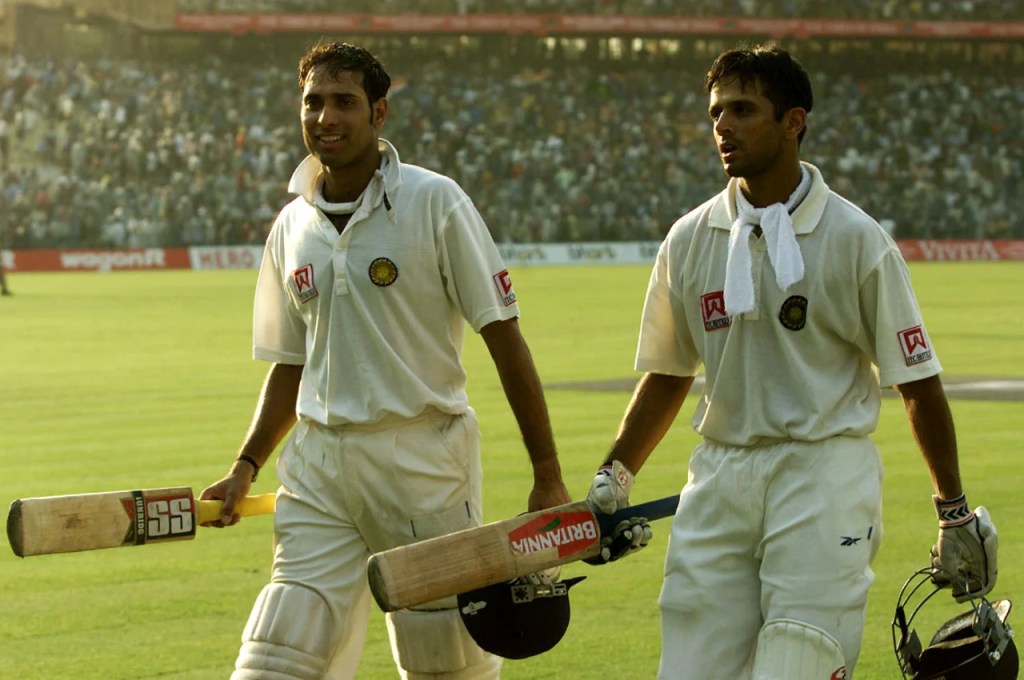
Image courtsey: ESPNCricinfo AFP
Match Summary
2nd Test, Eden Gardens, March 11 – 15, 2001, Australia tour of India
Australia 445 S Waugh 110, H Singh 7/123
& 212 (T 384) Hayden 67, H Singh 6/73
India 171 Laxman 59, McGrath 4/18
& 657/7d (f/o) Laxman 281, Dravid 180, McGrath 3/103
India won by 171 runs
 Expressions and Impressions
Leave a comment